On Cultural Organizations
Developing cultural infrastructures across institutions and independent organizations: Centre d’Art Contemporain Genève, Pinacoteca G.A. Levis Chiomonte, Arteco, Nova Express Magazine, Kabul Magazine, Barriera, Karussell, Treti Galaxie, Palazzo Irreale, Painters Painting Paintings.
Culture does not circulate by itself
2.3.1Cultural organizations produce meaning. But without structure, meaning accumulates, fragments, and becomes inaccessible. The question these organizations face is how to build the conditions under which communication becomes possible at all.
Working with Centre d’Art Contemporain Genève, Pinacoteca G.A. Levis Chiomonte, Arteco, Nova Express, Kabul Magazine, Barriera, Karussell, Treti Galaxie, Palazzo Irreale, and Painters Painting Paintings meant entering each organisation’s specific condition, its history, its contradictions, its public – and building a system capable of making it legible without making it simple.
Editorial systems and territorial fields
2.3.2Some organizations do not occupy a fixed position within the cultural field. They construct the field itself, or a portion of it, through the formats they produce.
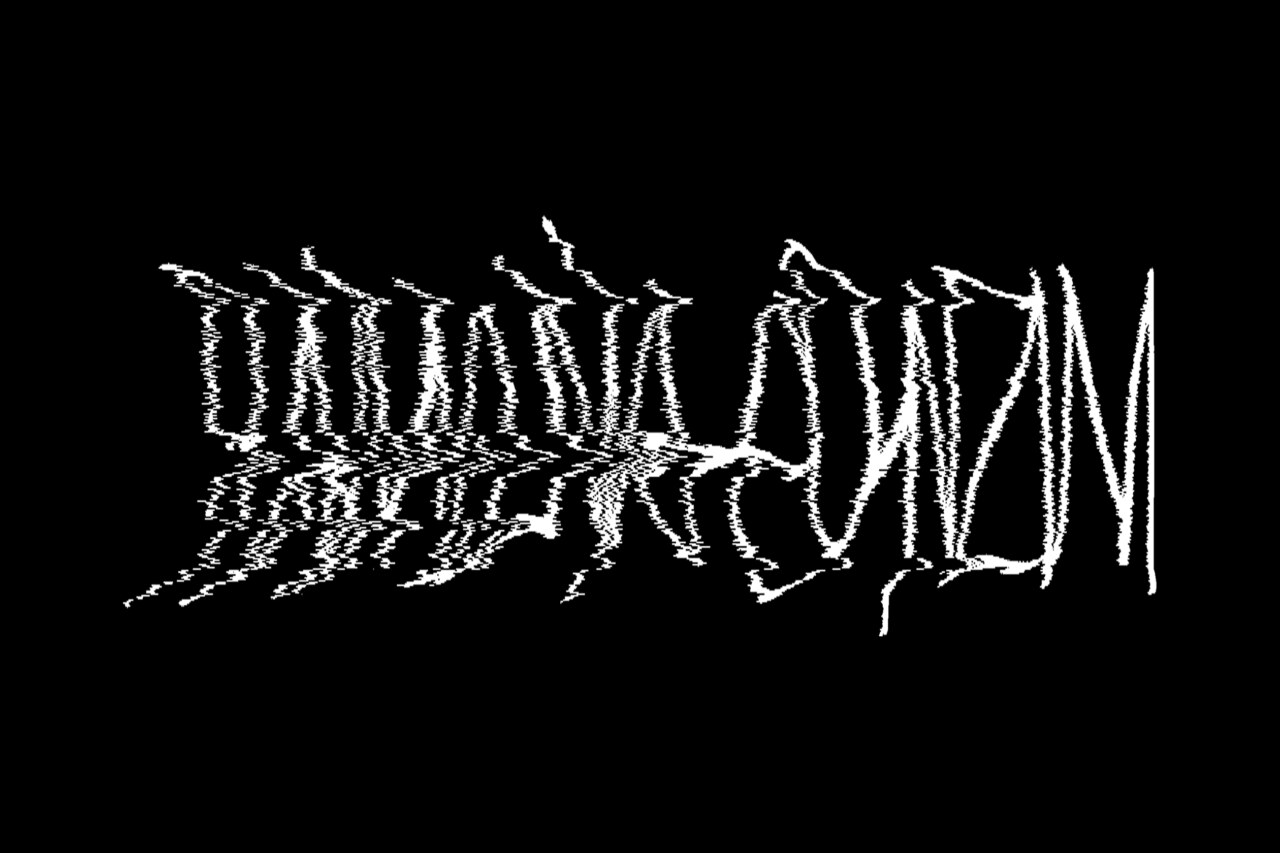
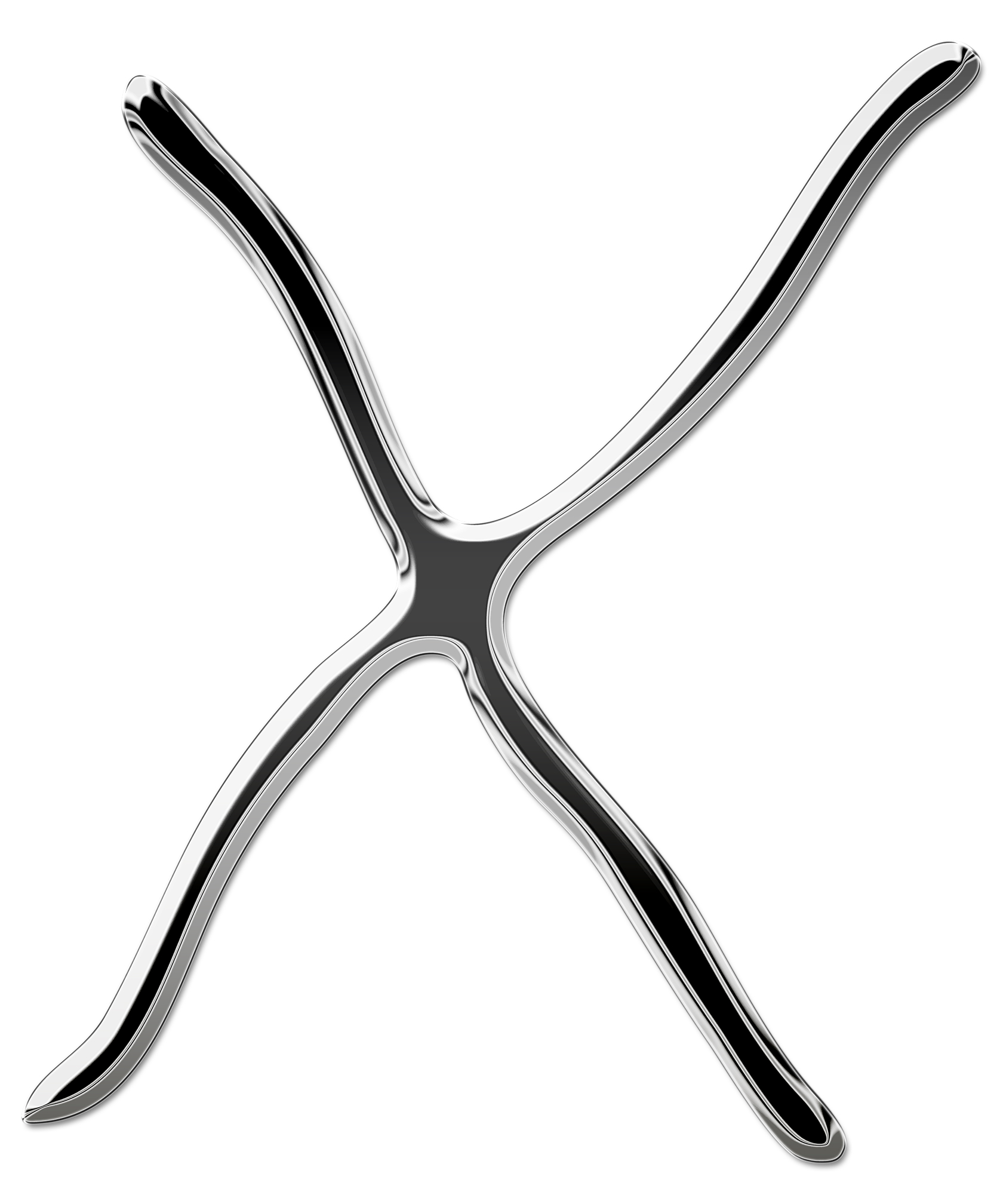
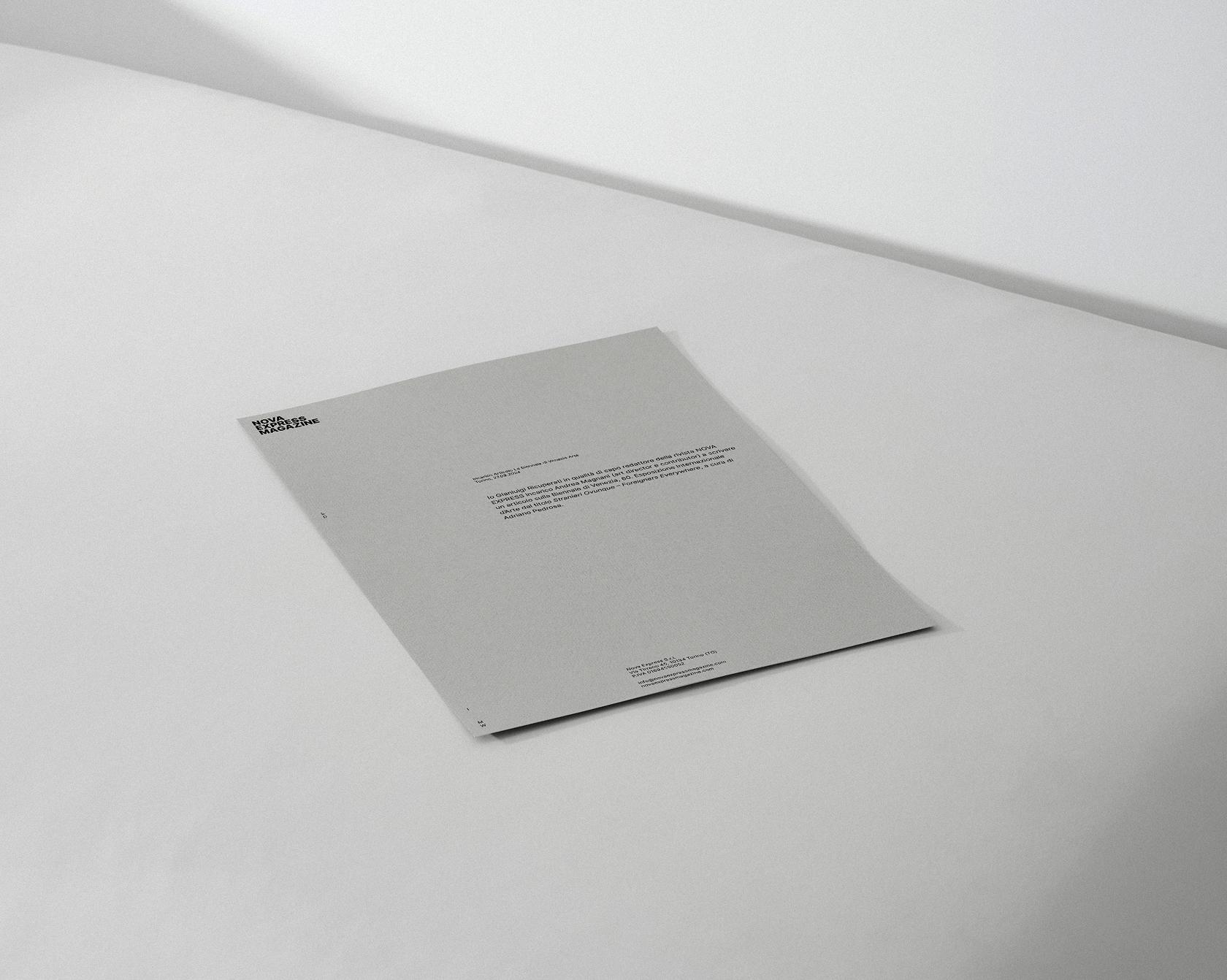
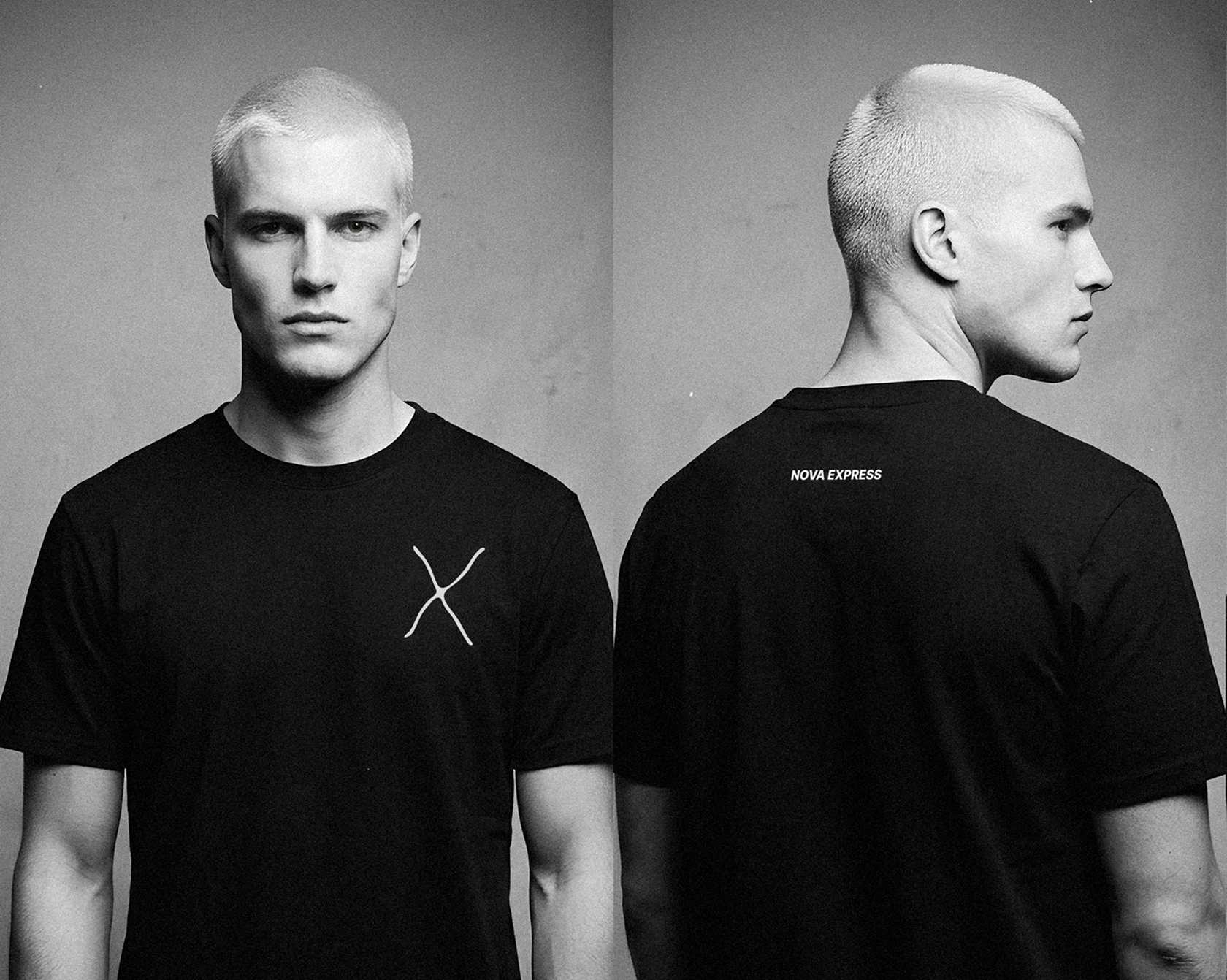
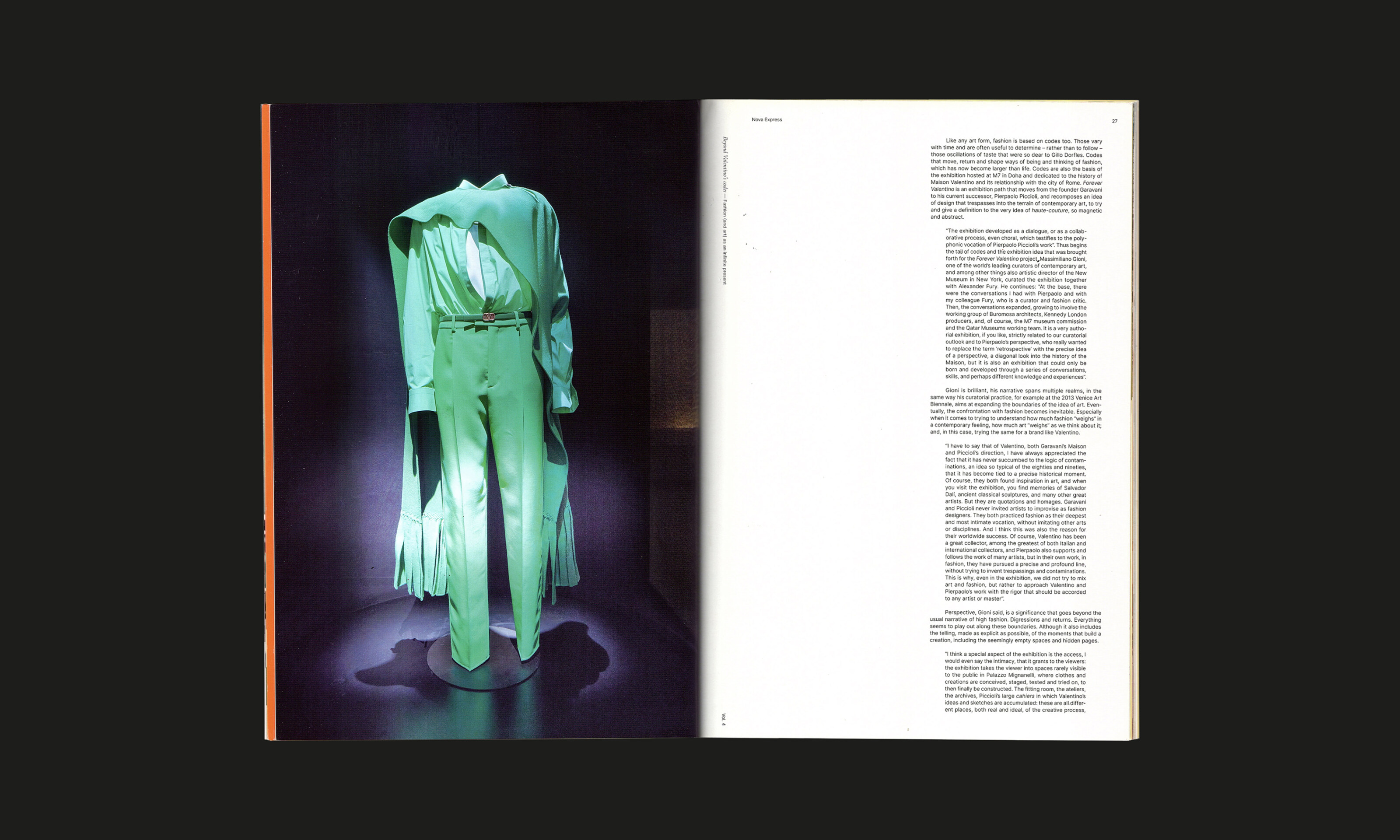
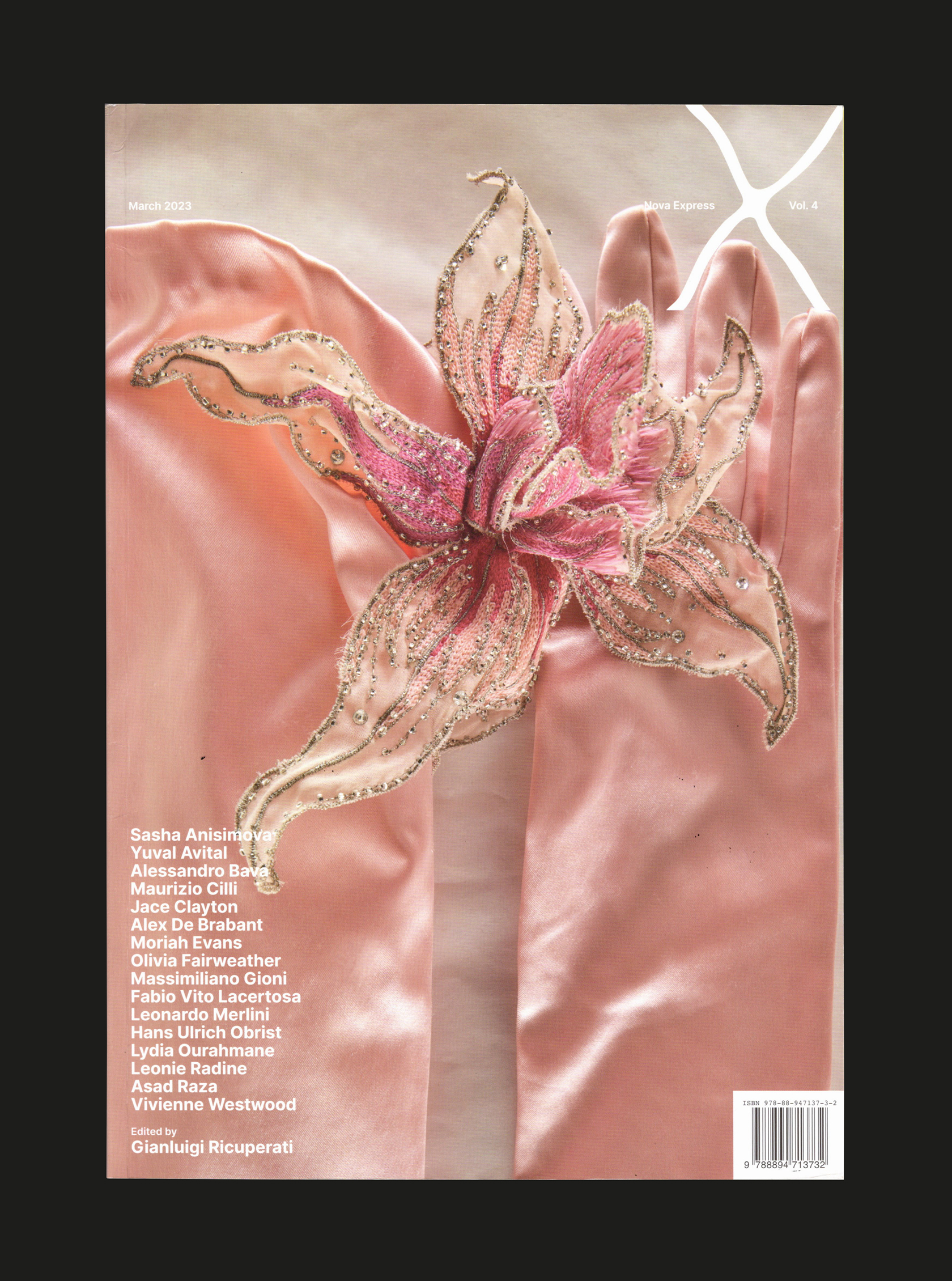
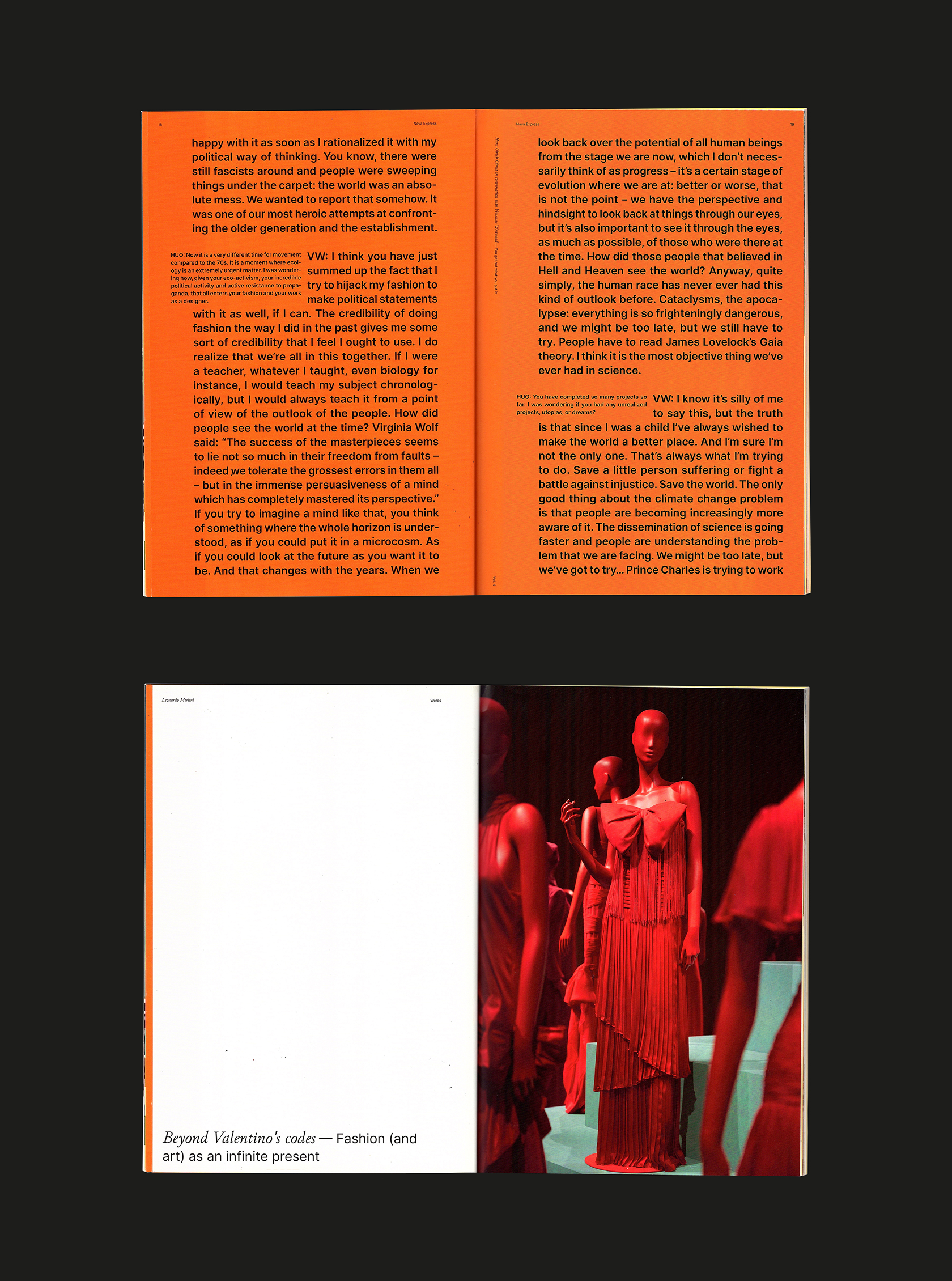
The magazine Nova Express requires a visual identity capable of holding the intersection between disciplines without establishing a hierarchy between them. The cross as logo represents where things meet. Karussell builds a different kind of field, a territorial one. Working through site-specific artistic interventions in the southern Marche region, it requires a visual system capable of connecting local specificity to broader cultural networks without colonising either. Treti Galaxie extends exhibition formats beyond physical constraints. The deliberately minimal identity system sets a ground stable enough to hold formats that do not yet exist.
Archives and access
2.3.3Some organizations hold knowledge that resists display. Collections, research, publications, histories; material that is valuable precisely because it accumulates over time, and that becomes inaccessible for exactly the same reason. The design problem is how to organize access to it without flattening what makes it specific.
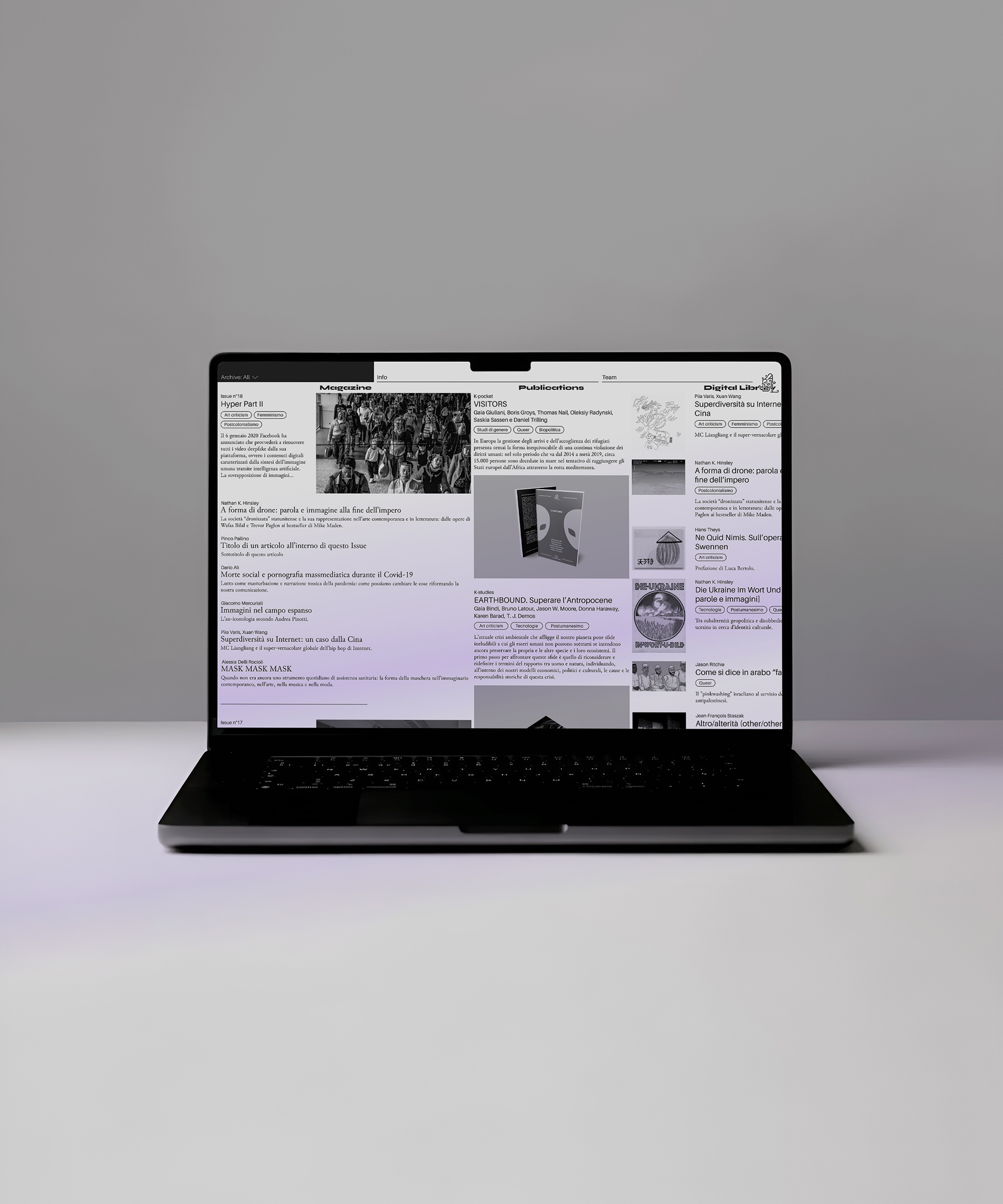
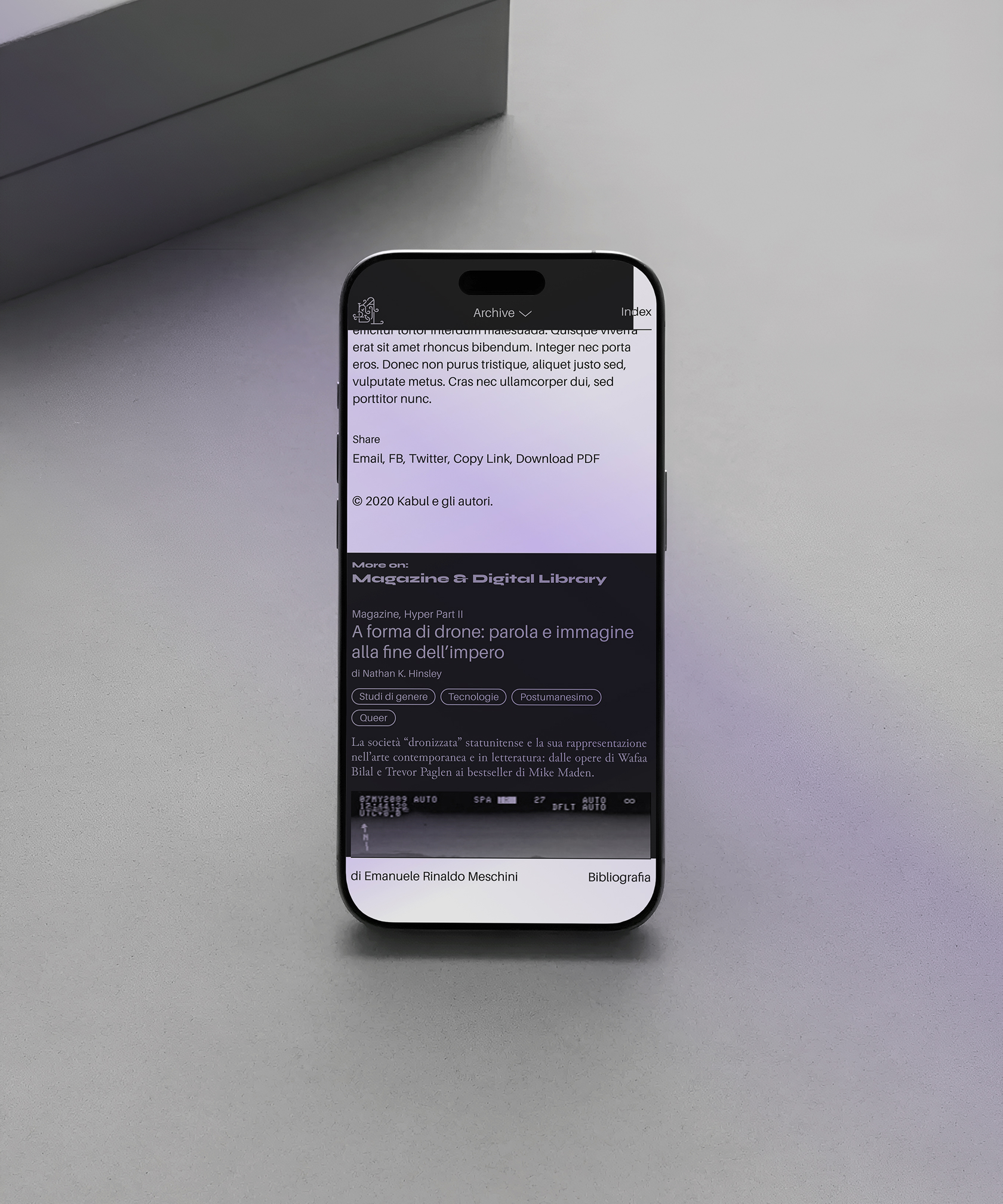
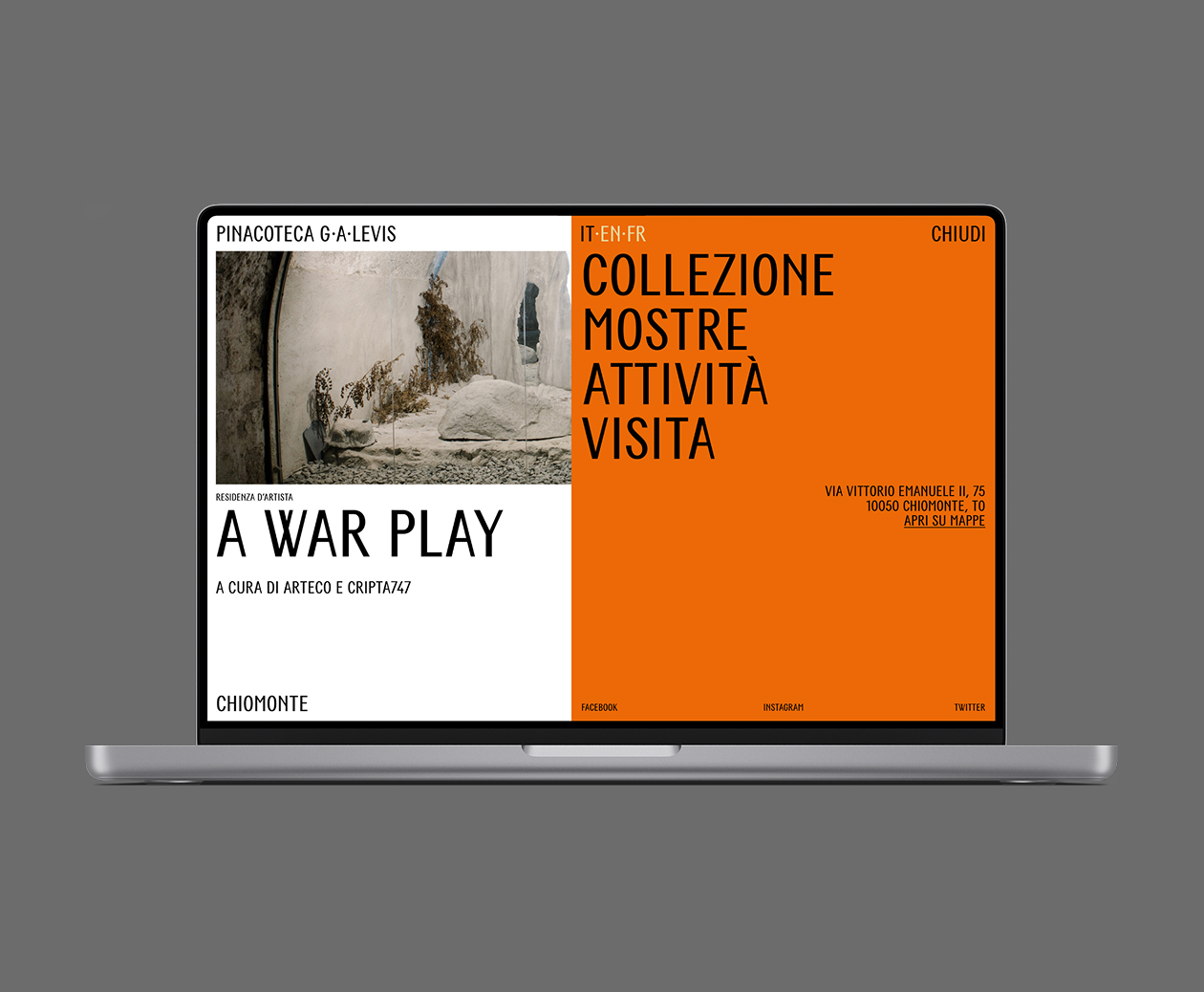
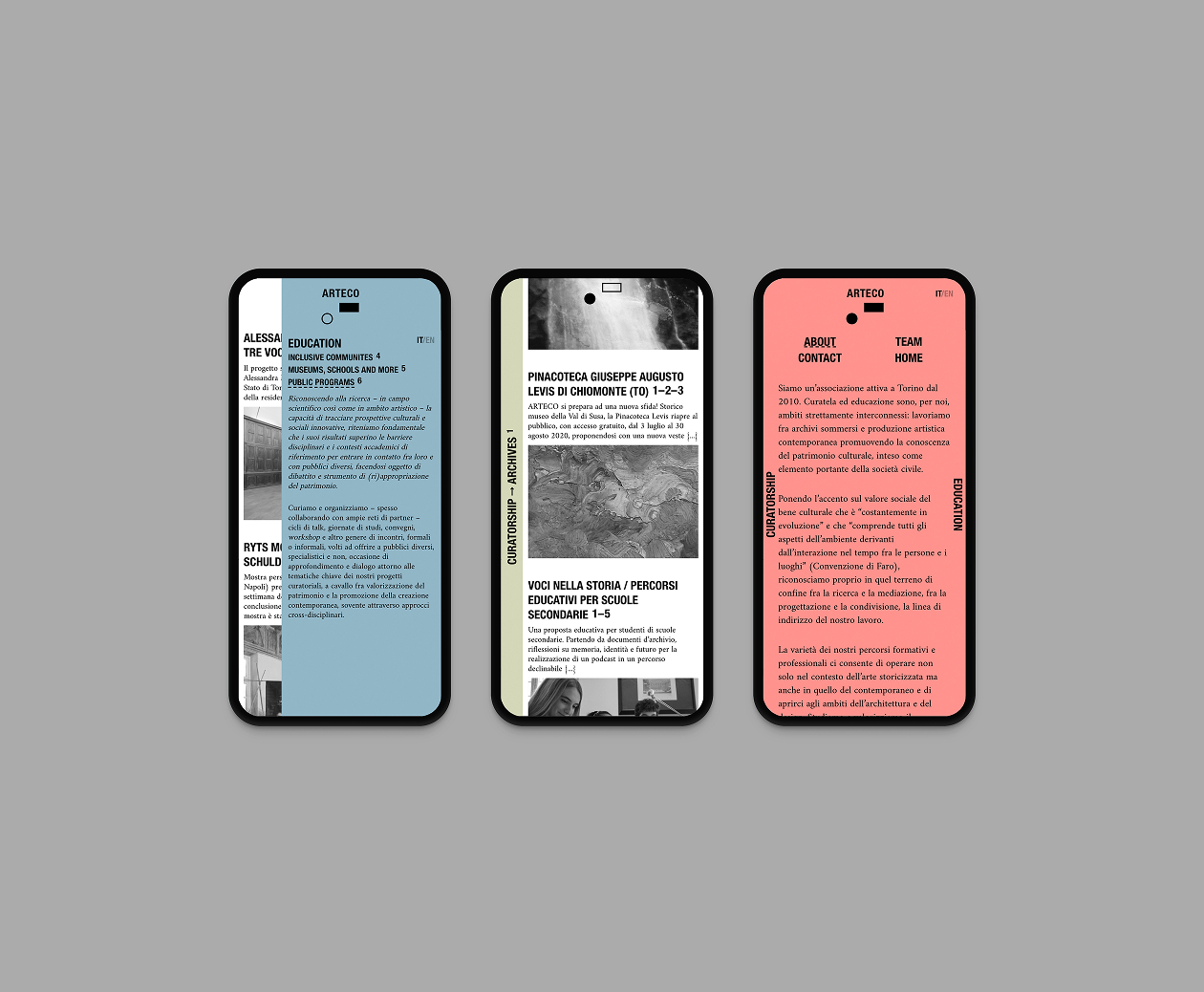
For Pinacoteca G.A. Levis Chiomonte, this meant building a digital platform around a visual identity rooted in local toponymic signage and the chromatic palette used as a navigational system. Kabul Magazine required a website structured to hold multiple reading paths: by theme, by format, by keyword, transforming the archive into a research tool. For Arteco, operating between heritage research and contemporary artistic production, the platform needed to direct different audiences toward different depths of content without fragmenting the organisation’s identity.
Identity under pressure
2.3.4Cultural organizations rarely operate within stable conditions. They evolve, reposition, expand, or redefine themselves without fixed institutional models. The identity work in these moments is about calibration: holding what the organisation has become and making visible where it is going.
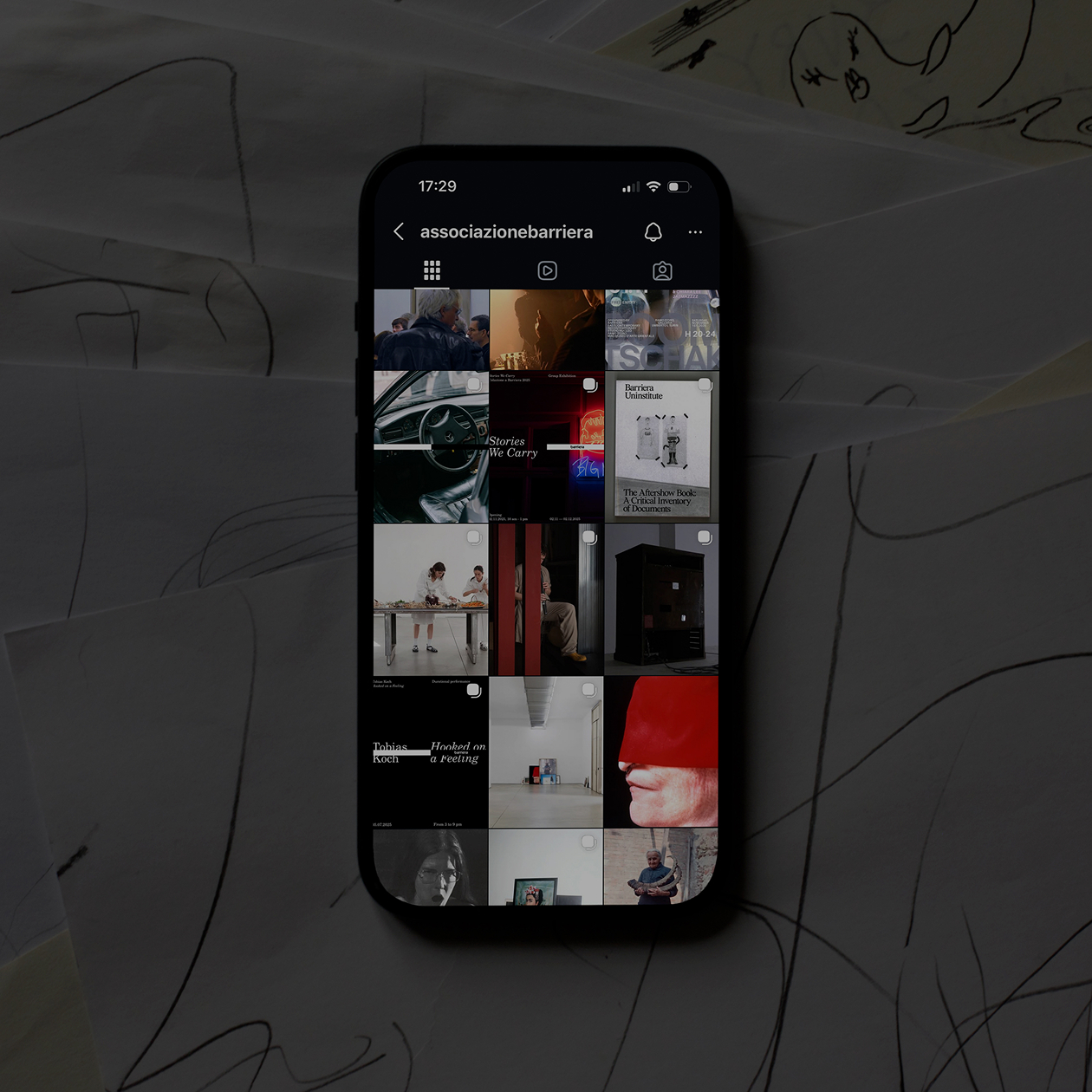
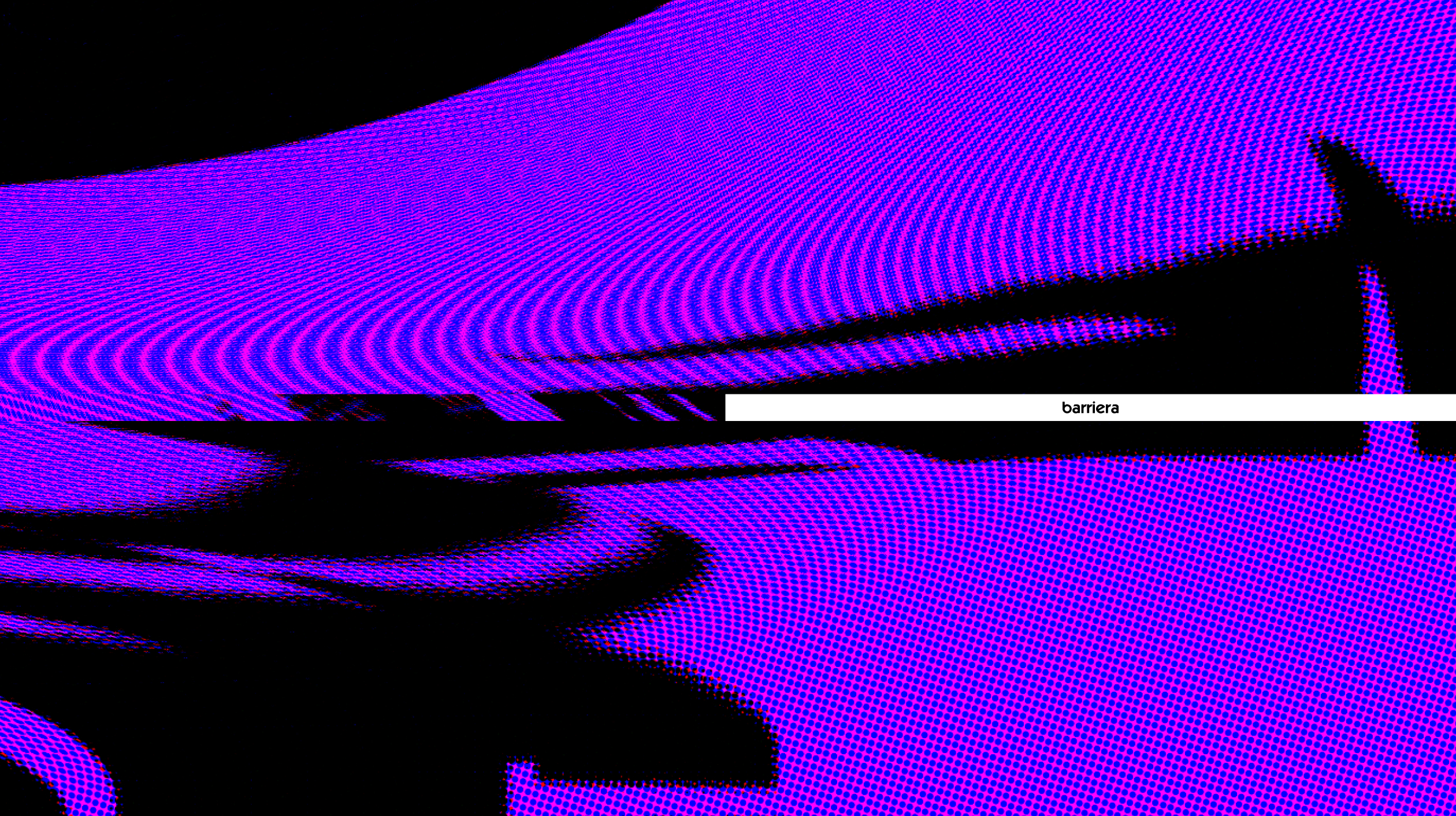
Barriera required reinforcing institutional presence without losing the experimental edge that defines the space. The graphic element developed for this project holds that exact tension between independence and institution. For Palazzo Irreale, established in 2024 within the historic Bosca Spa winery complex in Canelli, the challenge was building a digital infrastructure designed to sustain a contemporary cultural program inside a historically dense, corporate-origin context.
When the exhibition becomes the medium
2.3.5In some cases, the exhibition itself becomes the medium. Within Treti Galaxie, Endless Nostalghia is the clearest case – a digital exhibition conceived as an infinite scroll where artworks photographed in real locations appear like opening film credits. At the end, the site reloads with different images and a different font, beginning again. The exhibition regenerates itself continuously, never arriving at a final form.
Painters Painting Paintings approaches the same territory from a different direction: a platform built around slowness, attention, and progressive discovery, where zoom interactions, footnotes, and layered content transform viewing into an active process. Centre d’Art Contemporain Genève extended this logic into moving image – producing a promotional video for an exhibition launch where editing, pacing, and sequencing were treated as curatorial tools, allowing the exhibition to circulate as a time-based experience beyond its physical boundaries.
If this case resonates with you: office@siliqoon.com
More Cases
2.1 On Art Galleries
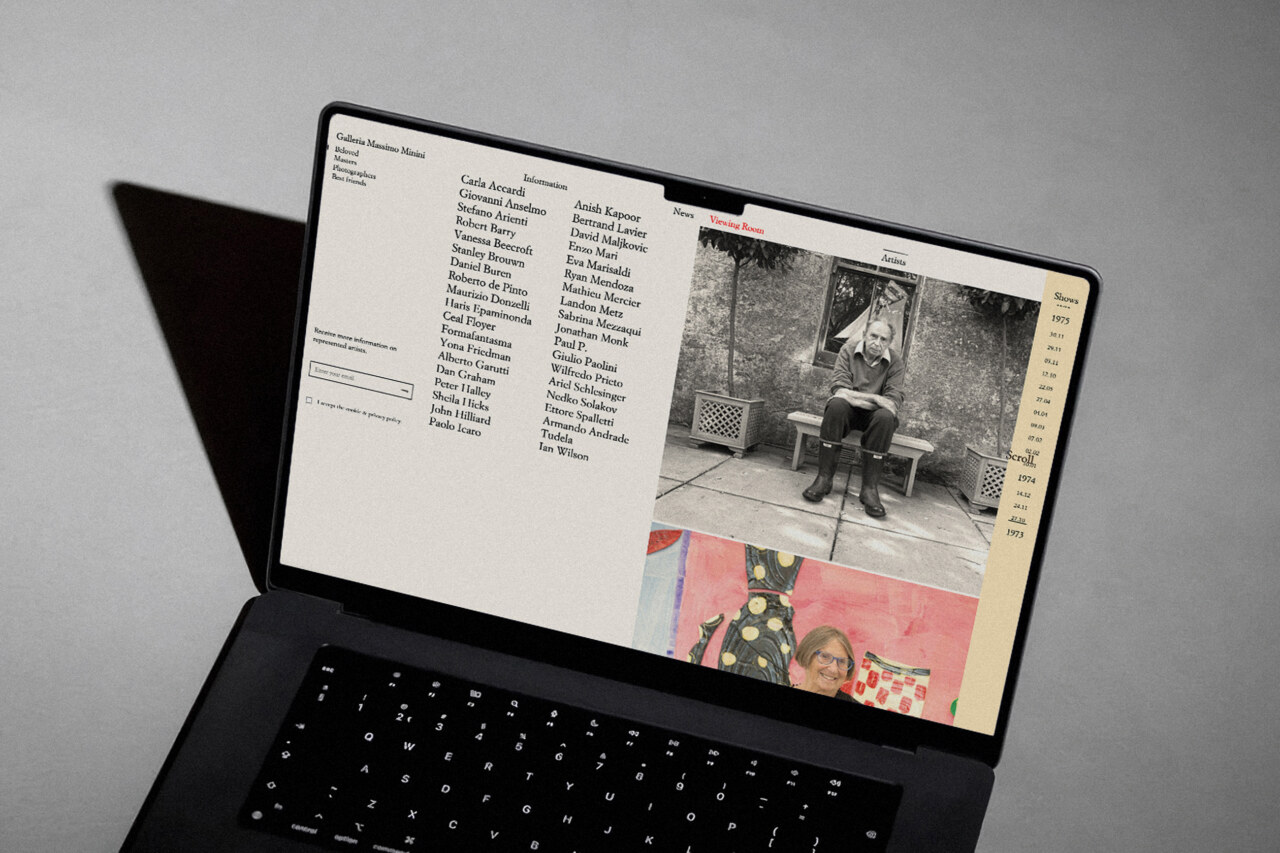
Open case Read caseA narrative across producing communication for art galleries, featuring: Secci, Clima, Galleria Massimo Minini, Francesca Minini, Renata Fabbri, Notte, The Ryder Projects.
2.2 On Fashion Brands
Open case Read caseDeveloping cultural and creative systems within fashion brands: Missoni, Aspesi, Marsèll, K-Way, Muso.
2.4 On Artists
Open case Read caseDeveloping identities, platforms, and contexts around artistic practices: Paola Pivi, Julia Krahn, Sara Enrico, Riccardo Baruzzi, Tiziano Martini, Viola Leddi, Emilio Fantin, Grace Prince, Ramona Ponzini, Andrea Magnani, Variante Artistica, Altalena, Resign.