 Close
Ludovica AnversaPainting that guards and regenerates
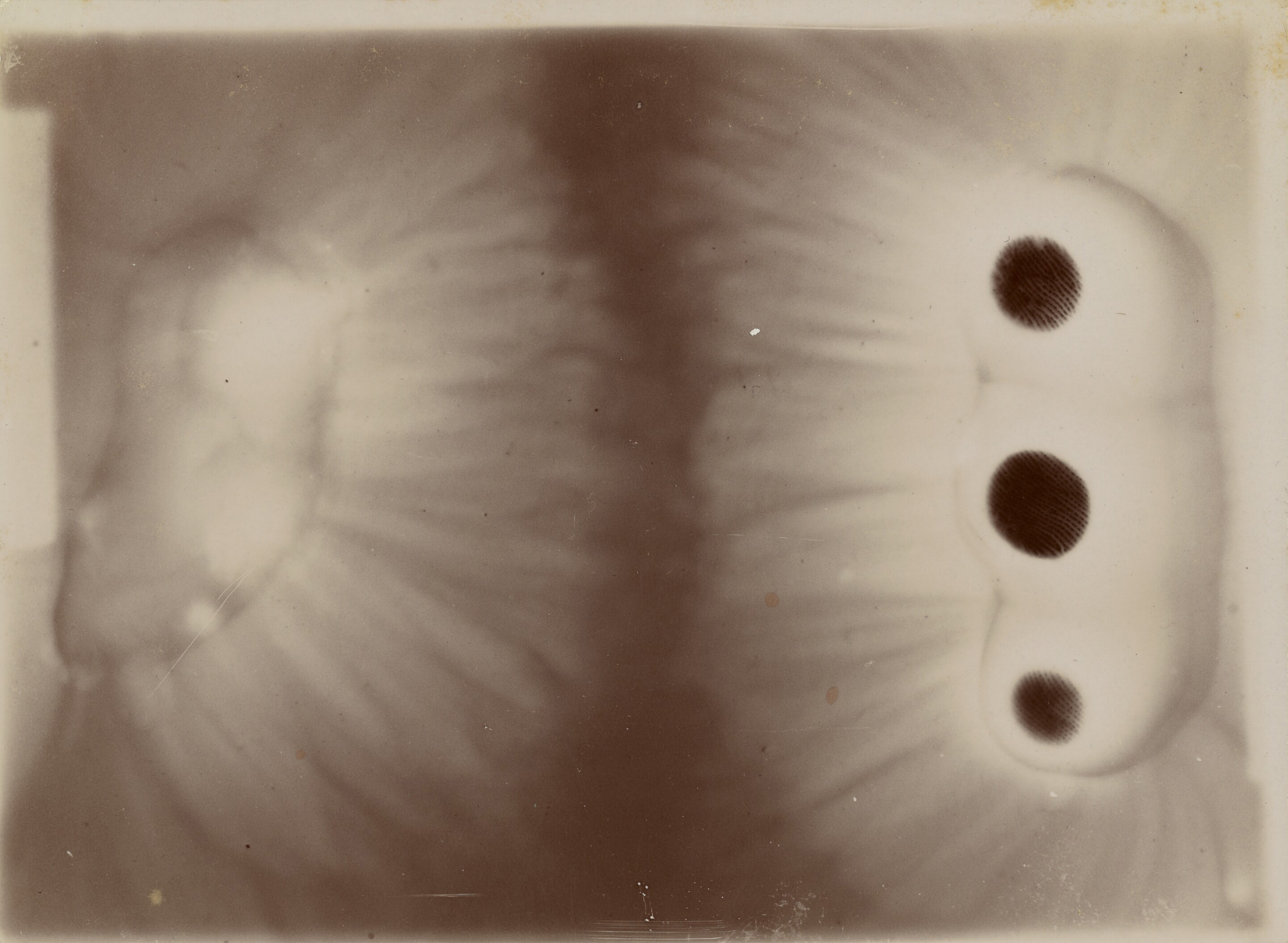
There is a point that does not disappear. It stays beneath the surface, pulsing, gathered into itself: an evanescent yet profound center. An image that persists, on the retina and on the canvas alike, and that Ludovica Anversa chooses not to erase. Her practice begins with this optical and psychic residue: the after-image as an unstable, hallucinatory trail that does not crystallize memory but holds onto it, translating it into a space of resonance with a ghostly consistency, one that amplifies and transforms. Whether as paintings or as small, hand-sized amulets, her works share the same idea of the body: porous, never isolated, constantly traversed by other substances and energies. Here time — nonlinear, never definitive — becomes a reactive component of the material, allowing the works to settle, rest, and mature, sometimes years apart. The repetition of gestures and postures becomes a personal pathosformel, unfolding through an intuitive, restless process. A dialogue between image and trace, between two and three dimensions, that yields a true somatic archive.
Zoë De Luca Legge: In your statement you cite Griselda Pollock, whose concept of after-images explores how artists use creative work as a tool for aesthetically processing pain and trauma. Borrowing this term for your paintings, do you see them as spaces where the spectral image of trauma is crystallized, or transformed into something new?
Ludovica Anversa: The after-image is first of all an optical phenomenon: the imprint left on the retina when you close your eyes after staring at a light source. It is unstable, hallucinatory, impermanent. Griselda Pollock puts it to psychoanalytic and poetic use — a reading I recognize myself in — understanding artistic practice as a process that neither erases trauma nor fixes it in place, but retains its traces and transforms them, translating them into aesthetic form. In this sense, I don’t see the painting as a biographical vitrine but as a space of resonance where the trace offers itself to the viewer, becoming an open, shared perceptual field.
ZDLL: The art historian asks whether trauma is “encrypted” or “inscribed” in the work. Does your painting practice, with its layers of matter and veils, tend more toward hiding — guarding, even — or toward revealing, as an imprint does?
LA: Your question reminds me of something James Elkins writes about how paintings begin. Elkins observes that a painting often originates around an initial point, a spontaneous intuition that, as the work grows around it, becomes an irritant, an obstacle. Yet that originating point never disappears entirely: it stays down there, like the fossil of an earlier knowledge, still telling an invisible story. He goes on with a material metaphor:
“Painting gathers around a fixed point, like a pearl oyster around a grain of sand. In the imagination every fixed thought is also an obstacle, an ossification of the freedom of thought. Like an inflamed tendon or a grain of sand in an oyster, it attracts treatments that tend to ease it and make it less painful. The painting turns around a fixed point, protecting and containing it like a bandage.”
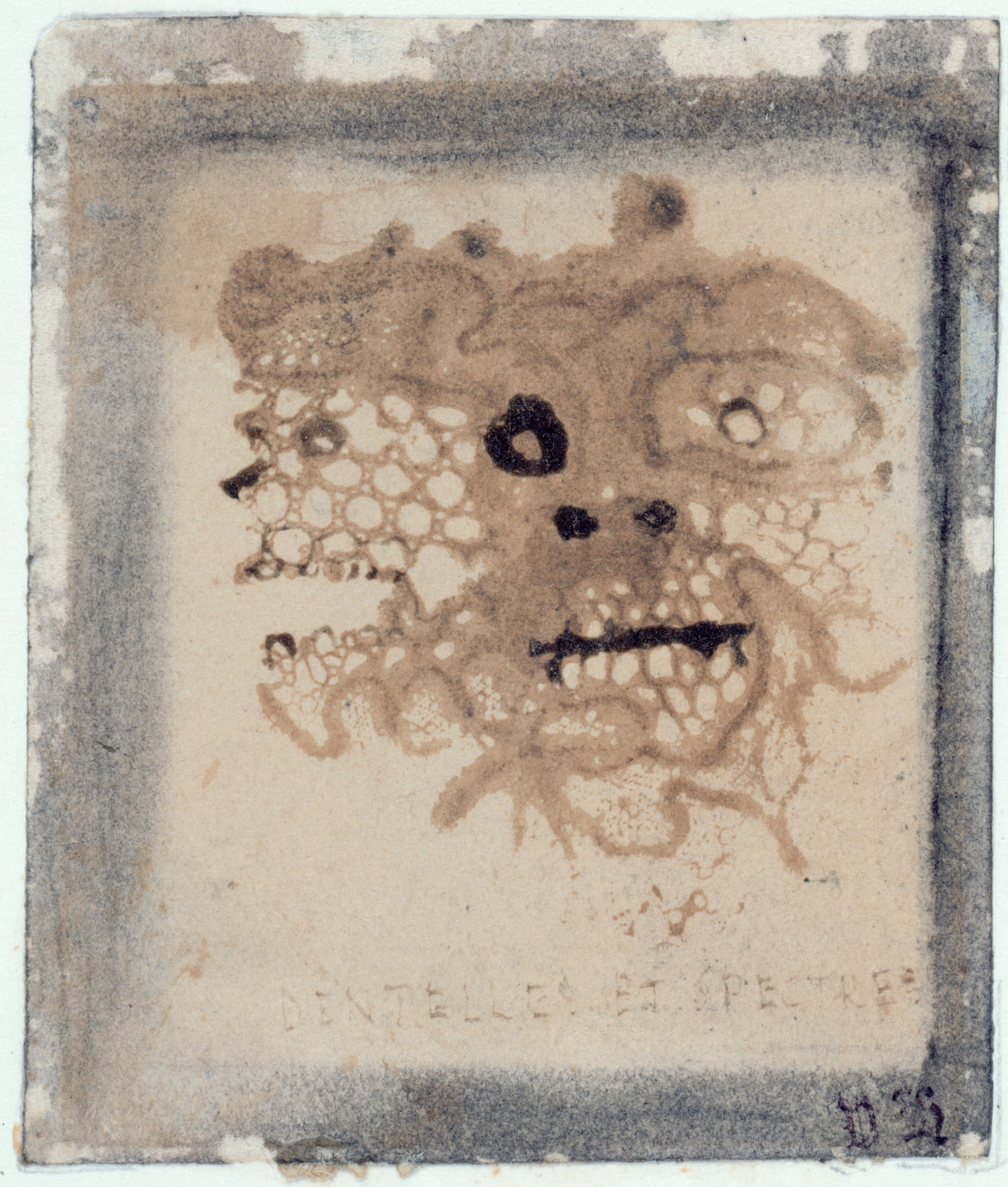
I often think of paint as something that intervenes to bandage, protect, and layer. But a bandage inevitably takes the shape of what it covers. For me the surface of a painting comes alive precisely because it guards a center that cannot be dissolved. Layers and glazes don’t erase what lies beneath; more often they throw it into relief, making it more cumbersome, but also denser, more precious.
ZDLL: Pollock also takes up the concept of pathosformel, the visually and emotionally charged trope that runs through the history of Western art and culture. Do you recognize recurring forms, postures, or gestures in your paintings?
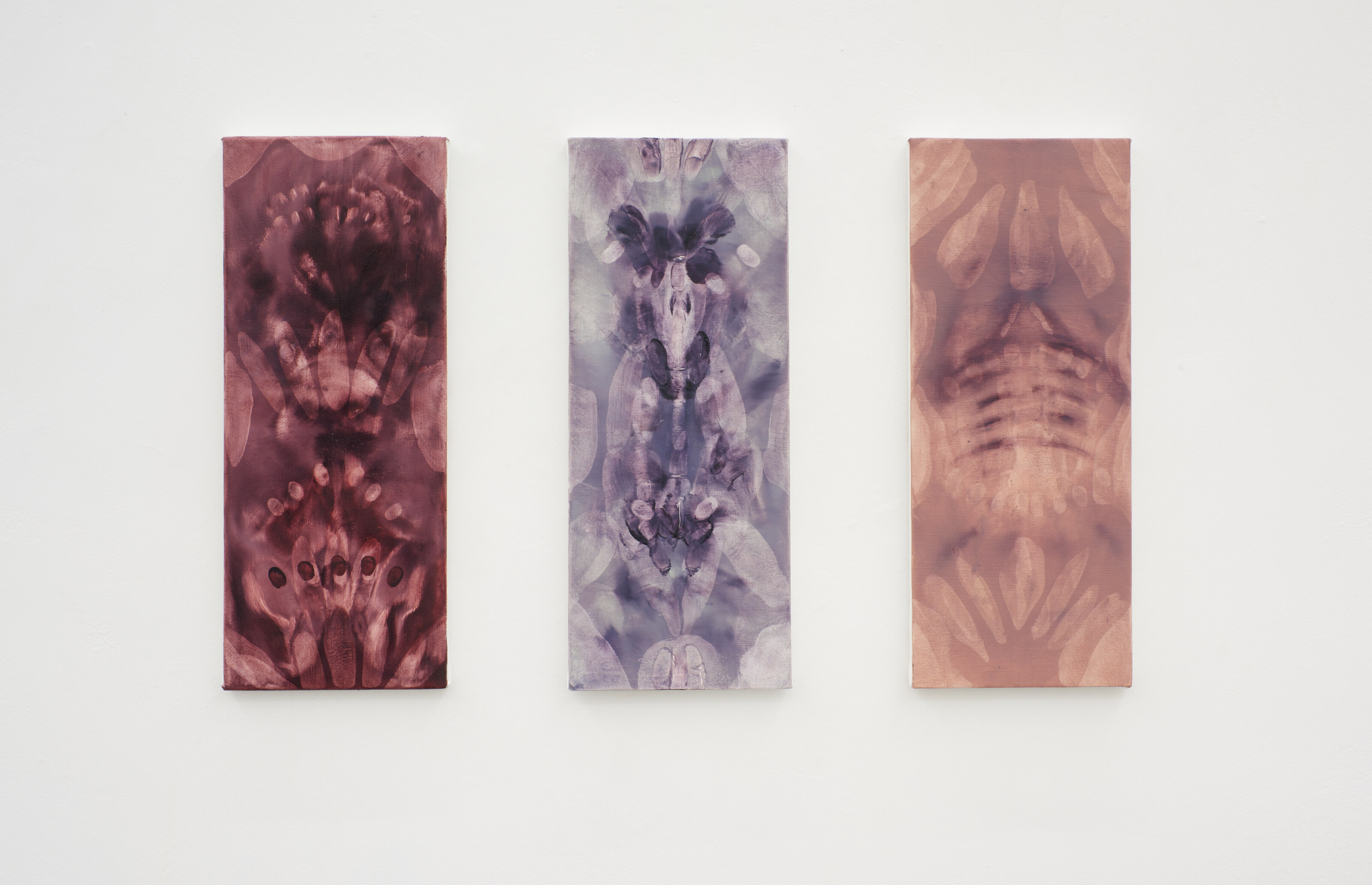
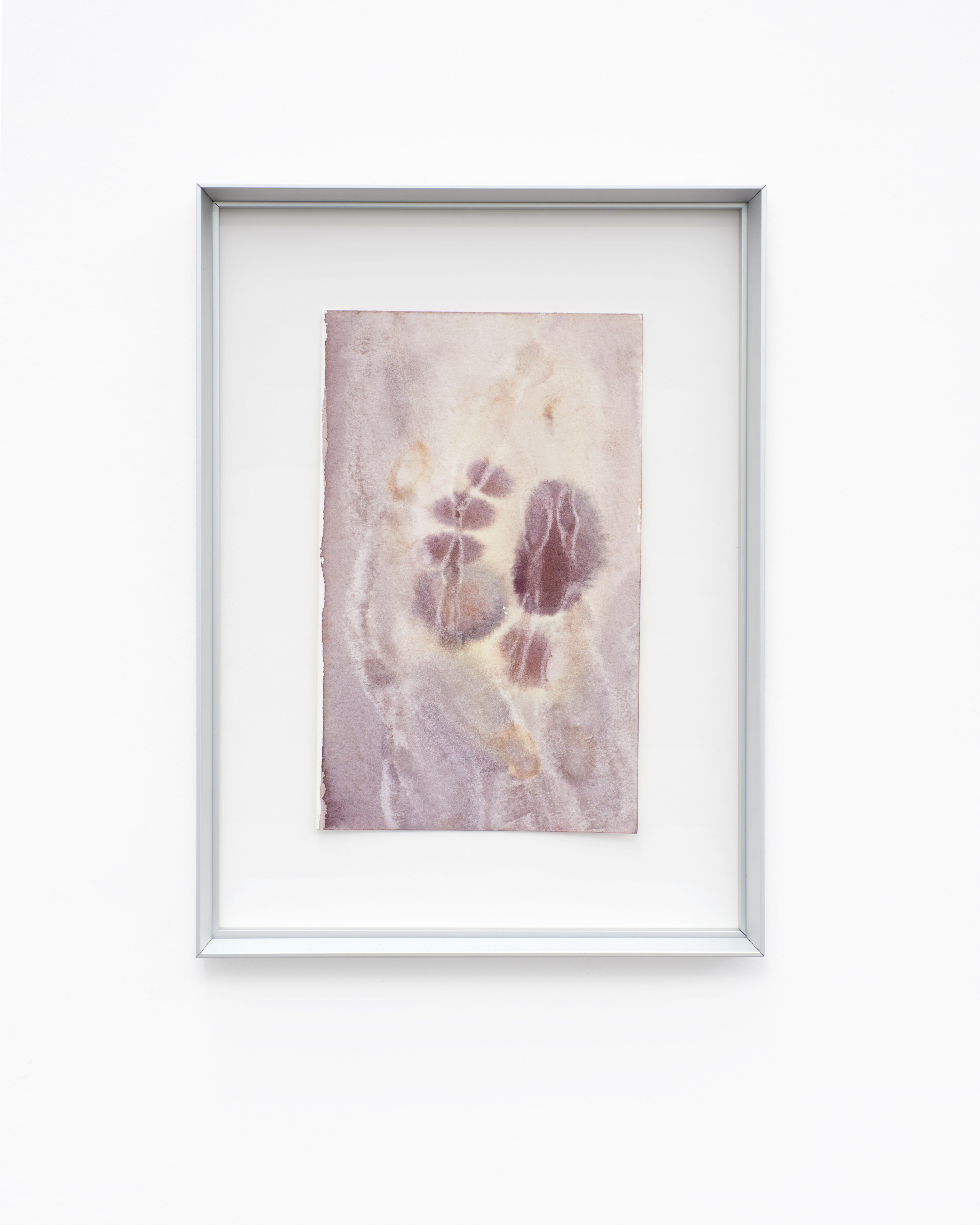
LA: Repetition plays a fundamental role in my work, both in the gestures and forms I paint and in the structure of the work itself. Recently, the obsessive choice of the vertical format has become a direct reference to the spine. The verticality of human posture records the strain of resisting gravity. Here I’m drawn to Thomas Moynihan’s perspective in Spinal Catastrophism, where the spine becomes the somatic archive of our evolutionary history: a vertebral monument recording the trauma of the passage from horizontal to upright. Among my recent paintings, the series where this format turns central is I Sew You I Mend You I Patch You I Lick Your Wounds I Read Your Blood I Read Your Body I Read Your Skin I Read Your Veins I Read Your Bones (2025), made for the Palazzo del Comune during Cremona Contemporanea – Art Week 2025.
Inspired by the fragmented language of Monique Wittig’s The Lesbian Body, the title is carnal, clinical, and loving at once: it names primary gestures, part of an absolute, obstinate intimacy.
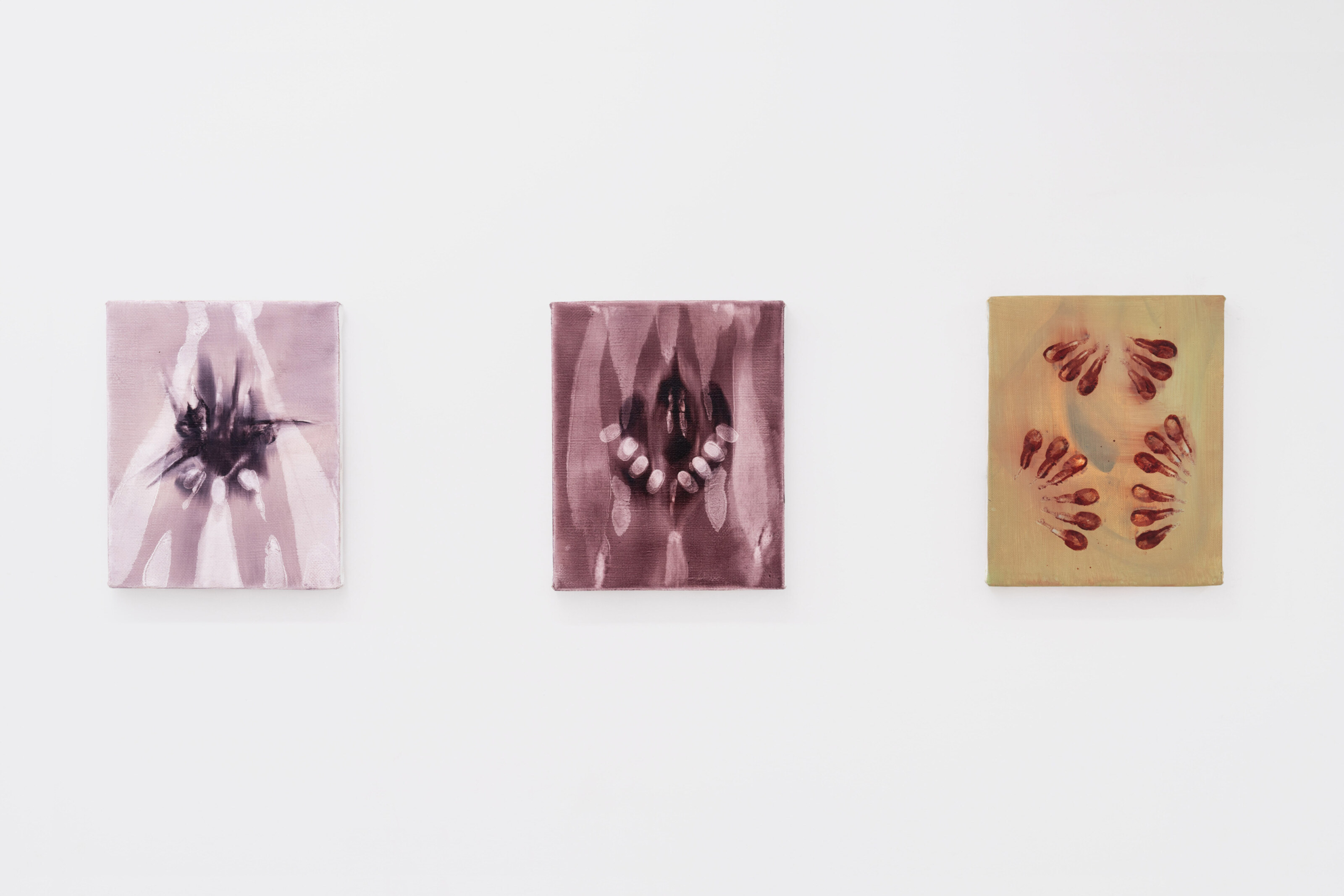
The series reads as a visual score where each element recalls a strange inflorescence, a fragment of spine, or a skin laid out flat. The marks that surface look like imprints, wounds in transformation, silent maps of a body traversed by time. The colors — worn, macerated pinks, violets, and ochres — immediately evoke raw flesh and blood, but also dust, scarring, and regeneration.
ZDLL: Speaking about your work, you have said that what has already been remains, and that the past is latent. Do you work more by subtraction or by addition?
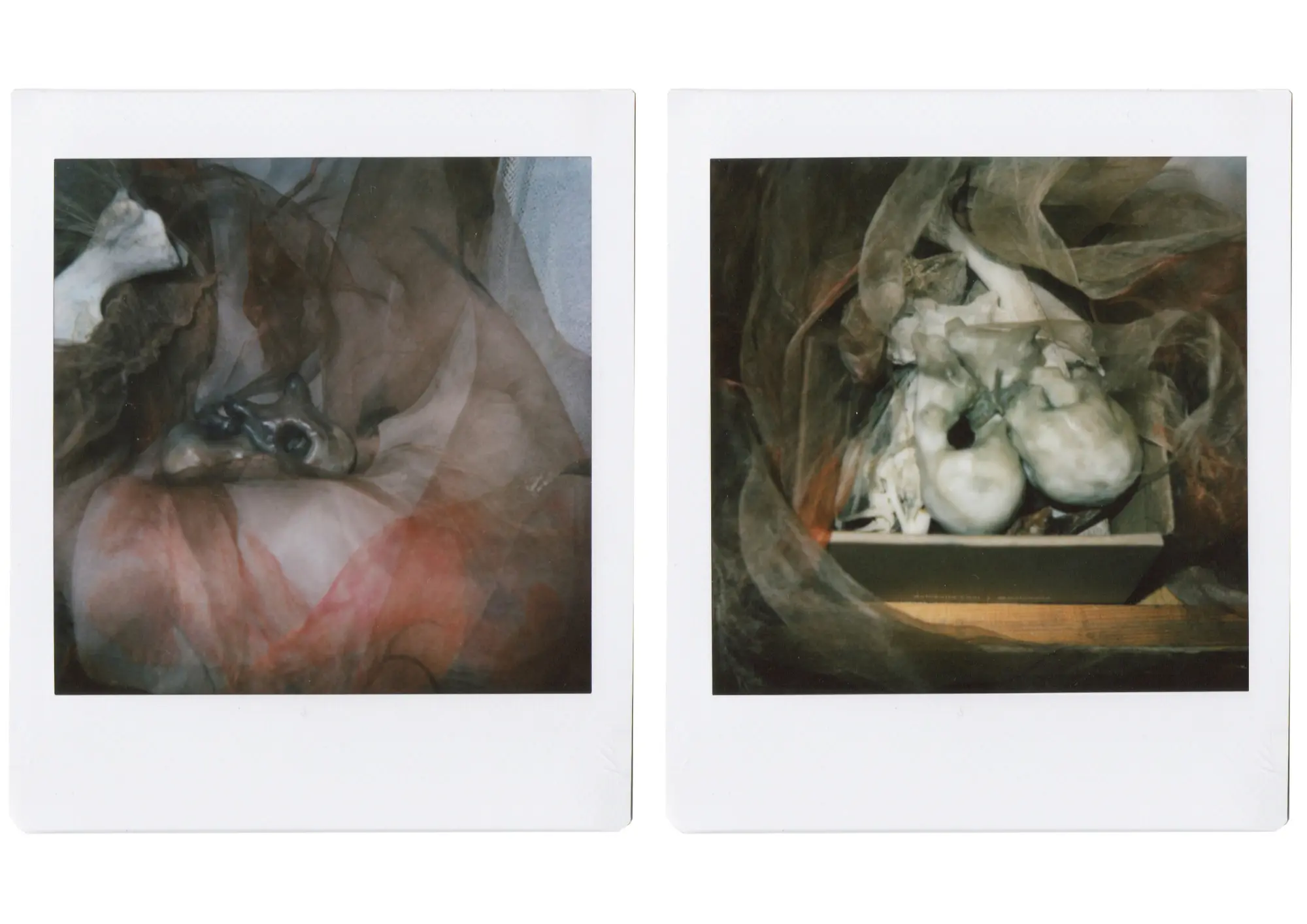
LA: For me the time of painting is never linear, not least because I rarely work on one painting at a time. My approach to the canvas is usually intuitive, and I almost never start from a predefined idea. I always have a sense of where I’d like to take the image, but I try to keep it vague, to leave room for instinct in the early phases of a painting and avoid “copying myself.” So I often find myself in phases of uncertainty, which I’ve come to consider the most exciting part of painting. Working on several canvases at once allows the more uncertain ones to settle, rest, and mature, then be taken up again, sometimes years later.
ZDLL: Has this prolonged working time changed your relationship with the work in any way?
LA: At a certain point I simply decided never to destroy a work again, and that’s when I discovered how fruitful it is to paint over an “abandoned” painting: it’s a way of keeping an organic continuity across the body of work, and usually the ones with the most scars end up being the most mature, most complete paintings. To answer your earlier question: on the canvas, the subtraction and addition you mention coincide.
Construction and deconstruction are two sides of the same coin: the very act of deconstructing a form already constructs a new one.
ZDLL: Your works sit in a state of becoming, where the figures already contain the germ of their future evolution. How do you decide to stop the creative process, leaving the work in that precise suspension between what is about to be born and what has already faded?
LA: Knowing when a work is finished usually comes down to reaching a specific intensity — aesthetic, chromatic, evocative — that feels right in that moment, or coherent with the series I’m working on. It’s an extremely variable threshold, one I also gauge through the dialogue that builds among the works in the studio. Sometimes that feeling of completeness arrives spontaneously and quickly; other times, as I was saying, it takes any number of second thoughts and changes of direction.
ZDLL: Like the paintings, your sculptures are also made over long stretches of time. Do you feel a substantial difference in your approach to two and three dimensions?
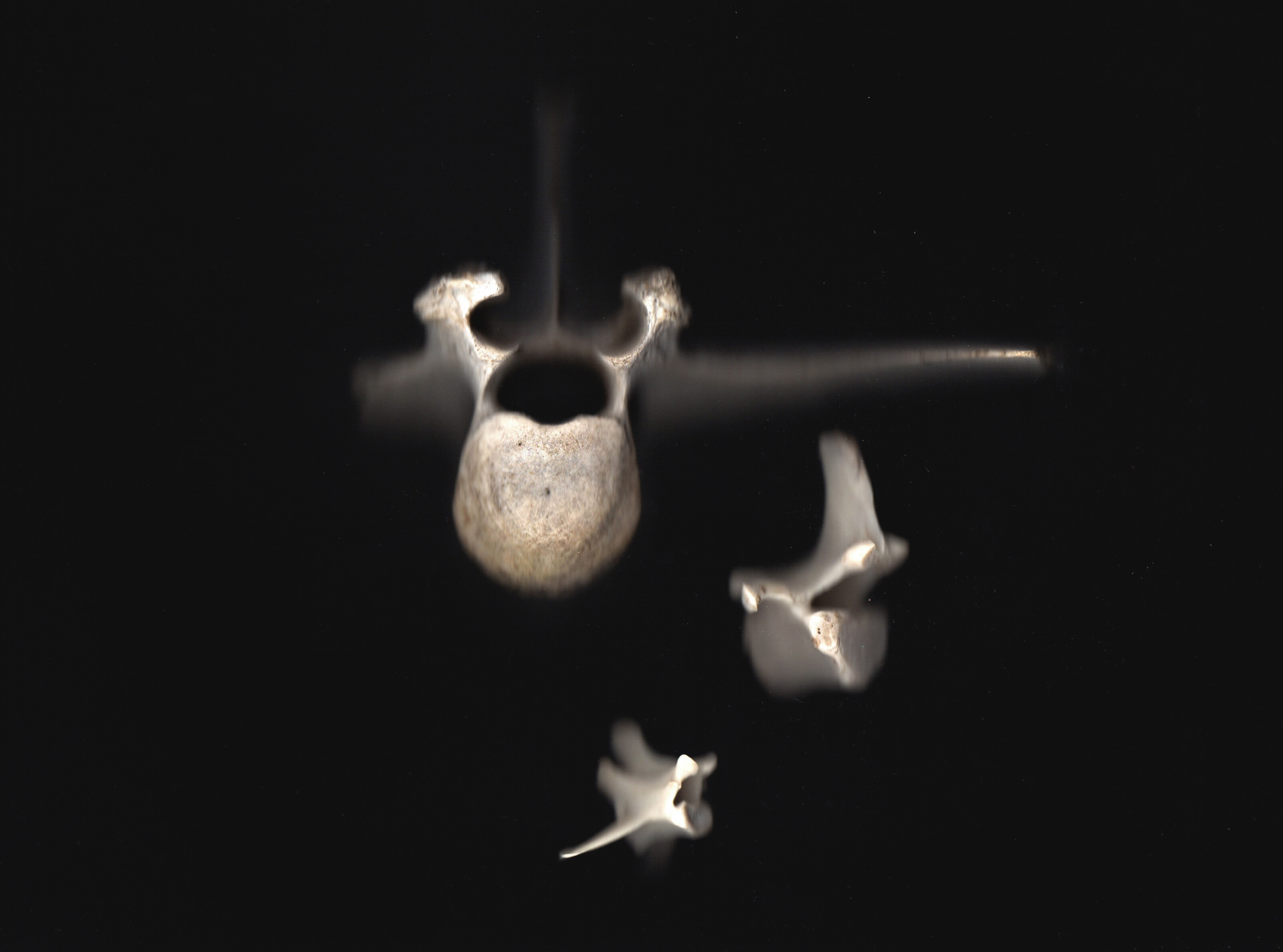
LA: When I paint, my gestures are often fast and impulsive. Painting for me is a dynamic, restless practice: I usually work standing at the wall, frequently moving the canvases flat onto a table or the floor. My physical and mental posture changes considerably when I sit down to work on a sculpture. My approach becomes more collected and meditative, with more defined rituals and steps. I usually begin by modeling small, compact forms in clay, tied to the imagery of my paintings — reminiscent of small vertebrae, or invented anatomical and natural figures. The clay has to dry thoroughly, so the sculptures sit for a long time in this roughed-out state. My favorite part comes later: melting the wax and trapping color and other elements between the layers.
As with the paintings, the sculptures get more interesting when I let less calibrated intuitions take over, creating fractures and then reconfiguring them more freely, often to the point of completely changing the initial form.
It isn’t only the imagery of the paintings that feeds the sculptures formally. Sometimes I embed the gauze I’ve used to dab a canvas, or dirty a sculpture’s surface with the colors I was just using on a painting. Overall, I think of myself primarily as a painter, and of my sculptures as points of three-dimensional condensation deeply interwoven with the painting.
ZDLL: You call your sculptures porous fragments. Could we say this porosity is the means by which the sculpture “touches” the viewer, creating a shared skin that dissolves the boundary between the one looking and the thing looked at?
LA: When I speak of porosity in the sculptures, I mean above all a visual quality. Wax, though impermeable, is semi-transparent: it lets the inner layers show through and holds small air bubbles. Historically there is a deep bond between wax and skin. I think of the wax anatomical models of the old ceroplastic tradition, of ex-votos, of the ancient use of wax for face casts, where the material clung so intimately to the body that it registered its pores and folds. Rather than “dissolving boundaries” in any theoretical sense, for me its apparent fragility is what keeps the sculpture from being a cold object: it evokes the vulnerability of both body and object. It’s an imperfect surface that lets you sense what’s inside, offering the viewer a visceral, almost tactile experience.
ZDLL: Speaking of transcorporeality between painting and sculpture, does the “ghost” occupy space differently in the two media?
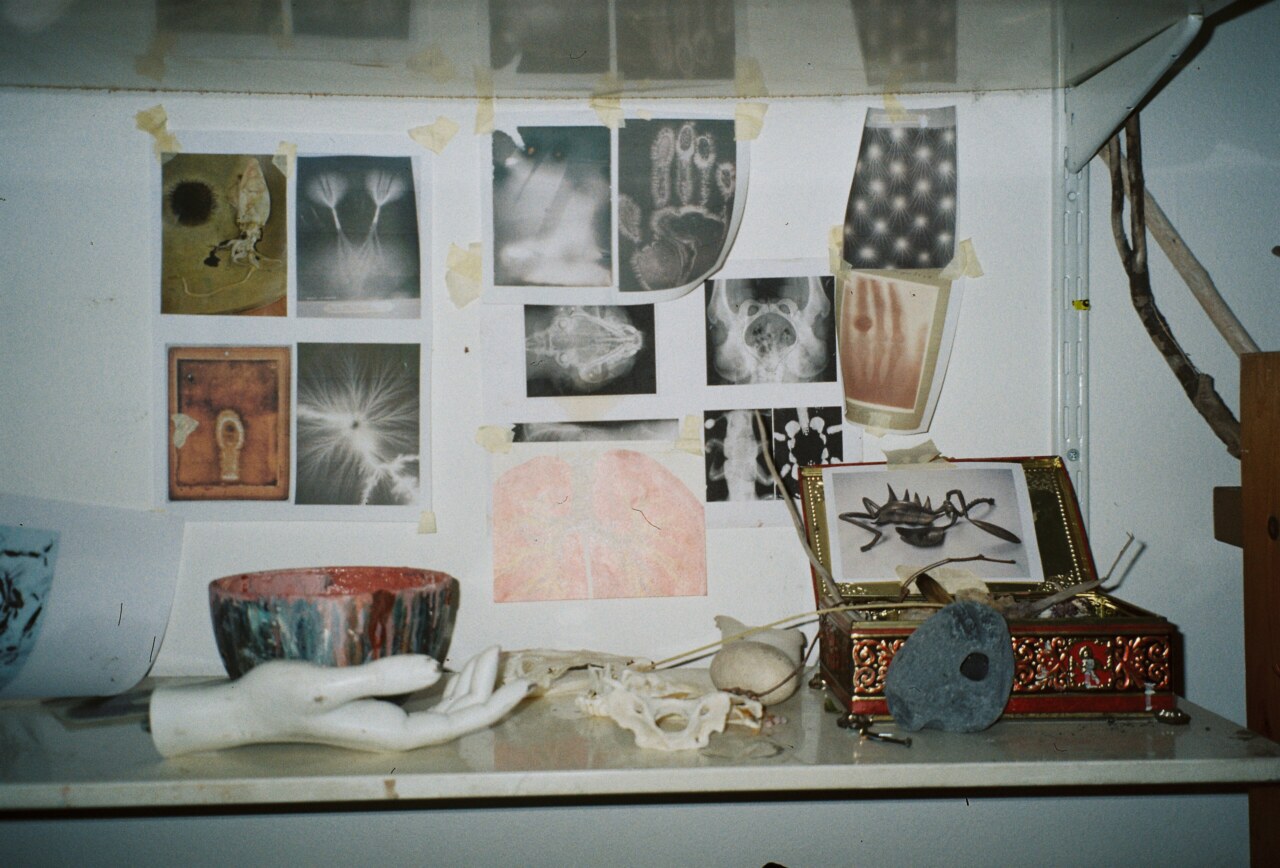
LA: In the paintings, the spectral image takes on a more “radiographic” cast: transparencies, structures, hidden anatomies rising to the surface.
Then there is a dimension, present in both painting and sculpture, that resonates with ectoplasm — a mysterious, organic, viscous matter that escapes control.
Not a disembodied spirit, but an undisciplined, fluid, contaminated substance, historically associated with female bodies, that refuses any closed, definable form.
Related Cases
2.3 On Cultural Organizations
Open case Read caseDeveloping cultural infrastructures across institutions and independent organizations: Centre d’Art Contemporain Genève, Pinacoteca G.A. Levis Chiomonte, Arteco, Nova Express Magazine, Kabul Magazine, Barriera, Karussell, Treti Galaxie, Palazzo Irreale, Painters Painting Paintings.
2.2 On Fashion Brands
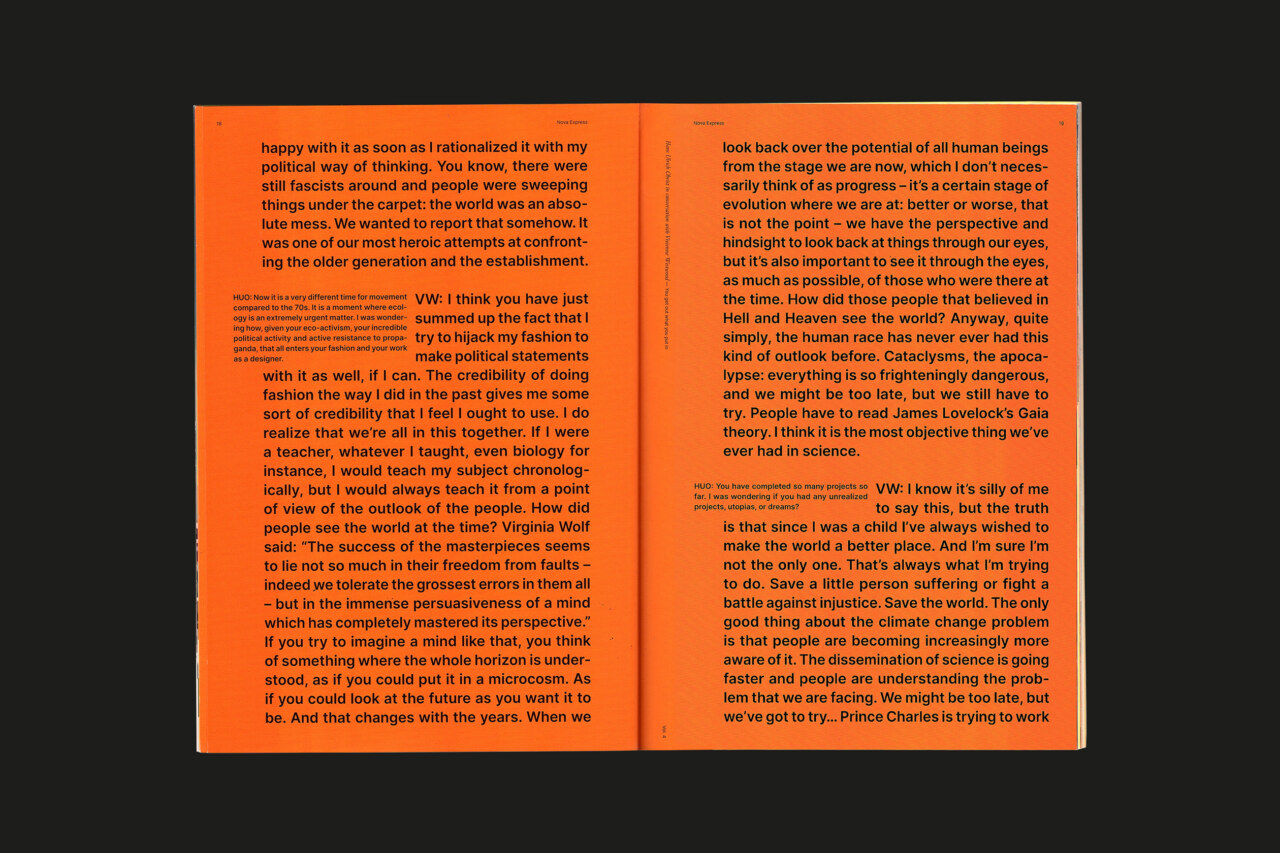
Open case Read caseDeveloping cultural and creative systems within fashion brands: Missoni, Aspesi, Marsèll, K-Way, Muso.
2.1 On Art Galleries
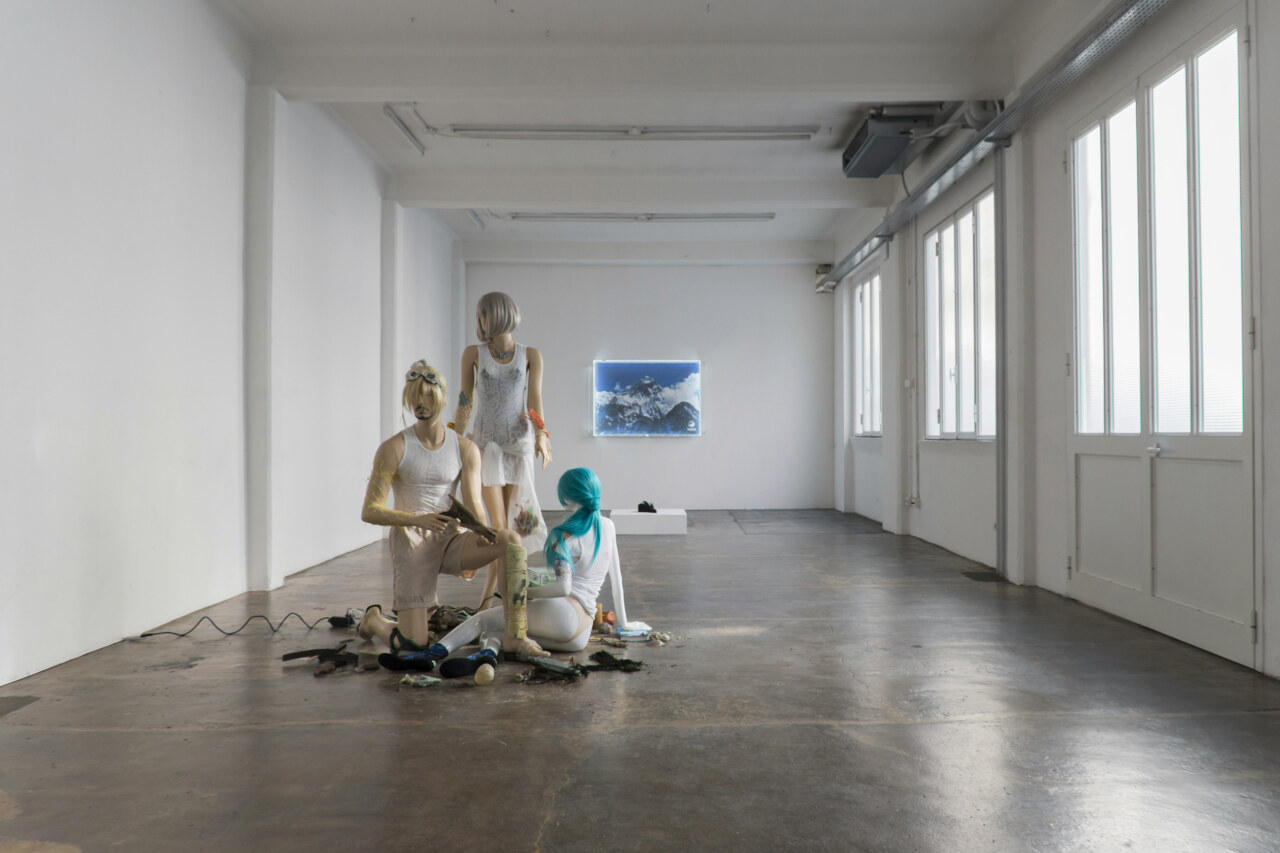
Open case Read caseA narrative across producing communication for art galleries, featuring: Secci, Clima, Galleria Massimo Minini, Francesca Minini, Renata Fabbri, Notte, The Ryder Projects.