 Close
ThermomasculinityAbout computers, cooling and care
Late one night on TikTok, not really watching anything, I stopped on a video. Barely a video: two stills, one after the other, each held just long enough to read, looping. First a guy’s face lit blue by a screen, mouth open, delighted. Then the cut, and the object of all that delight: a computer running The Sims 4. The text sits over both frames and doesn’t move, stitching them together: “Girls after buying a $2000 pc that has the power of a space station.”
The joke isn’t complicated. Girls buy powerful machines for the wrong reasons. The tower with the fancy cooling loop, the one you could mine crypto on, the one built to render complicated 3D worlds fast, and they bought it to run The Sims. The gag only lands if we’ve already agreed that this is a waste, and enough people had agreed for the algorithm to keep it moving until it reached me.
Two things in it kept me there. The first is that The Sims is not a random choice. Of all the games it could have reached for, the punchline lands on the one about building a house, feeding people and keeping everyone from wetting themselves. Domestic labour, rendered playable. The meme doesn’t only say women are using the machine wrong; it says of course they are, look what they use it for. The second is the word “girls.” Not women. The industry is full of women setting genuinely new terms for what a role model in tech looks like, and the caption reaches past all of them for a word that means not grown up yet, not serious enough for a real machine. Or, more bluntly: they don’t know anything, because they’re girls.
Technofeminist scholarship has been working on this for decades, tracing the slow disappearance of women from the story computing tells about itself. The field was built in large part on the labour of the so-called “Computer Girls”, a phrase used without embarrassment through the 1960s and 70s, and one that sits uncomfortably close to the text I had just watched loop. Historians like Nathan Ensmenger and Ruth Oldenziel have shown how the gendering happened, and their answer turns on a split that still structures the whole field: soft-ware and hard-ware.
Women were praised for maintenance: for tuning, patching, keeping the system alive, and the “hand-work” of computing. Men took the hardware, which is to say they took the part that got called intellectual. One kind of work becomes care and is invisible when it goes well; the other becomes engineering and gets a keynote. It is the same shape as the meme, where women’s relationship to the machine is domestic and the serious, brainy, power-hungry stuff sits somewhere they aren’t invited to.

I would probably have left it there, filed as a bad joke
with a familiar argument attached, if I hadn’t spent a week
in Taipei watching men pour liquid nitrogen onto processors.
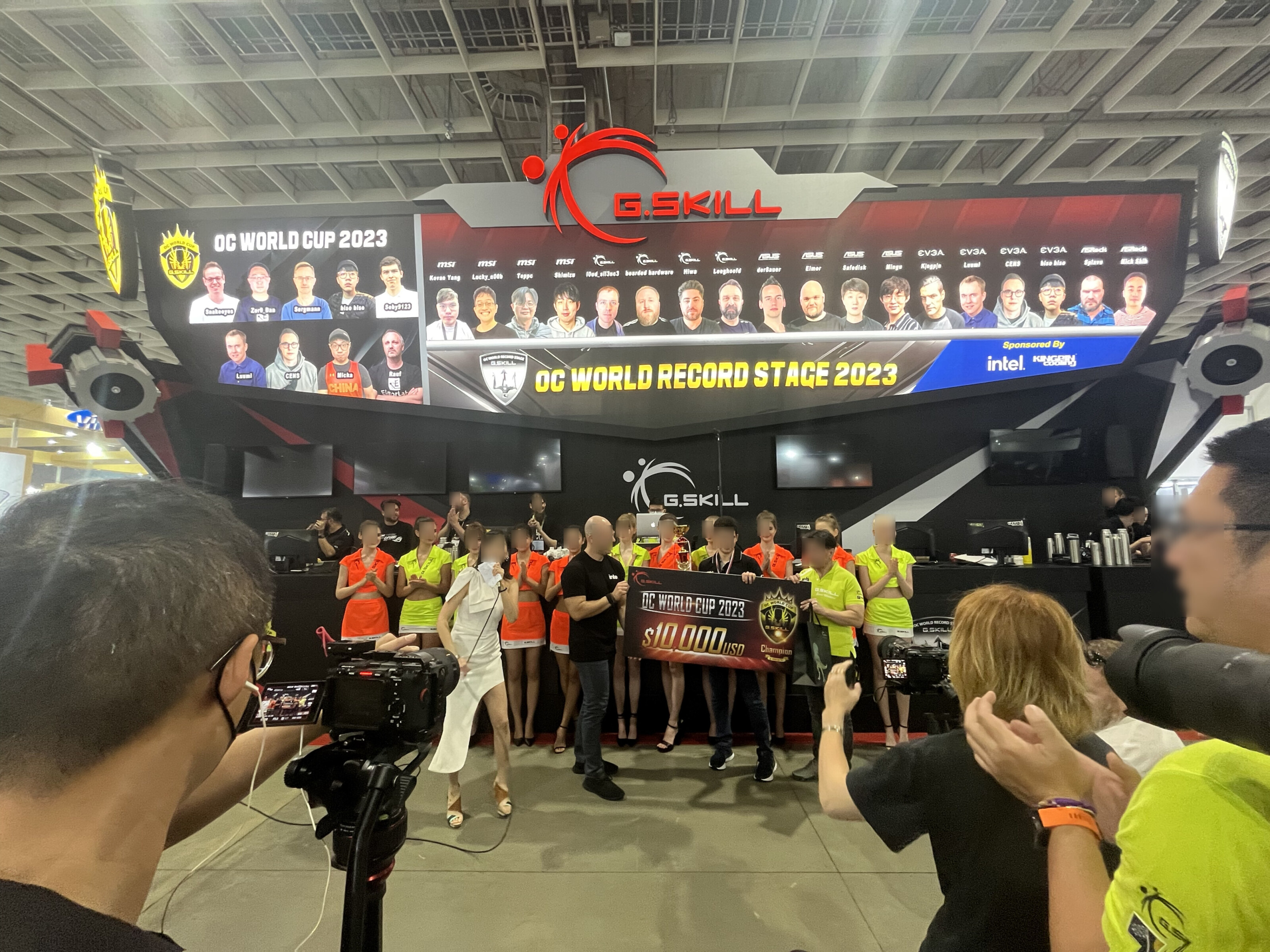
COMPUTEX takes over the Nangang Exhibition Center once a year and it is enormous. It’s where the big manufacturers unveil what they’ve been building: AI hardware, gaming rigs, and cooling, which was the reason I was there. The whole fair runs on one unspoken premise, which is that more power is self-evidently good and the only real question is how to stop it melting.
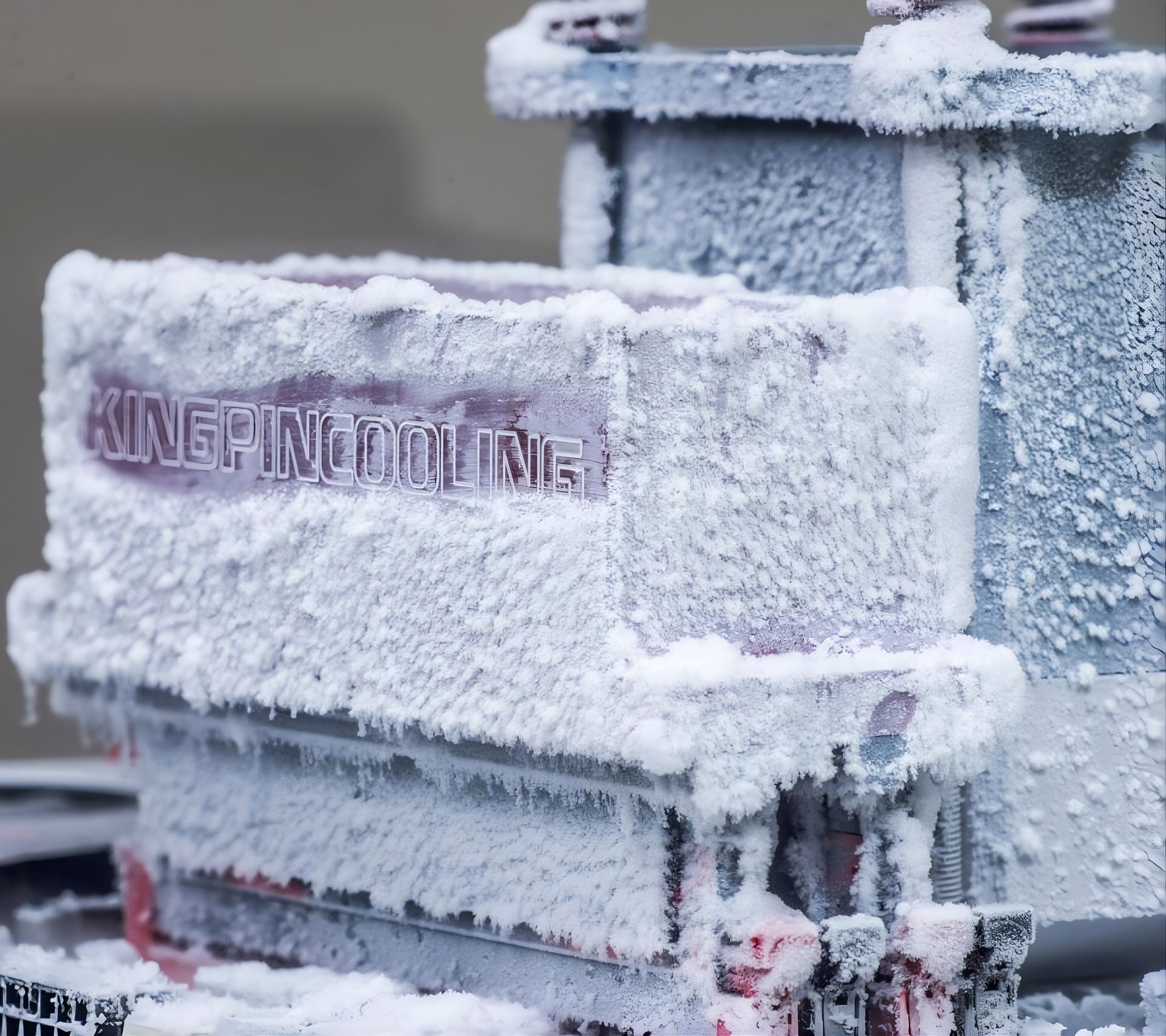
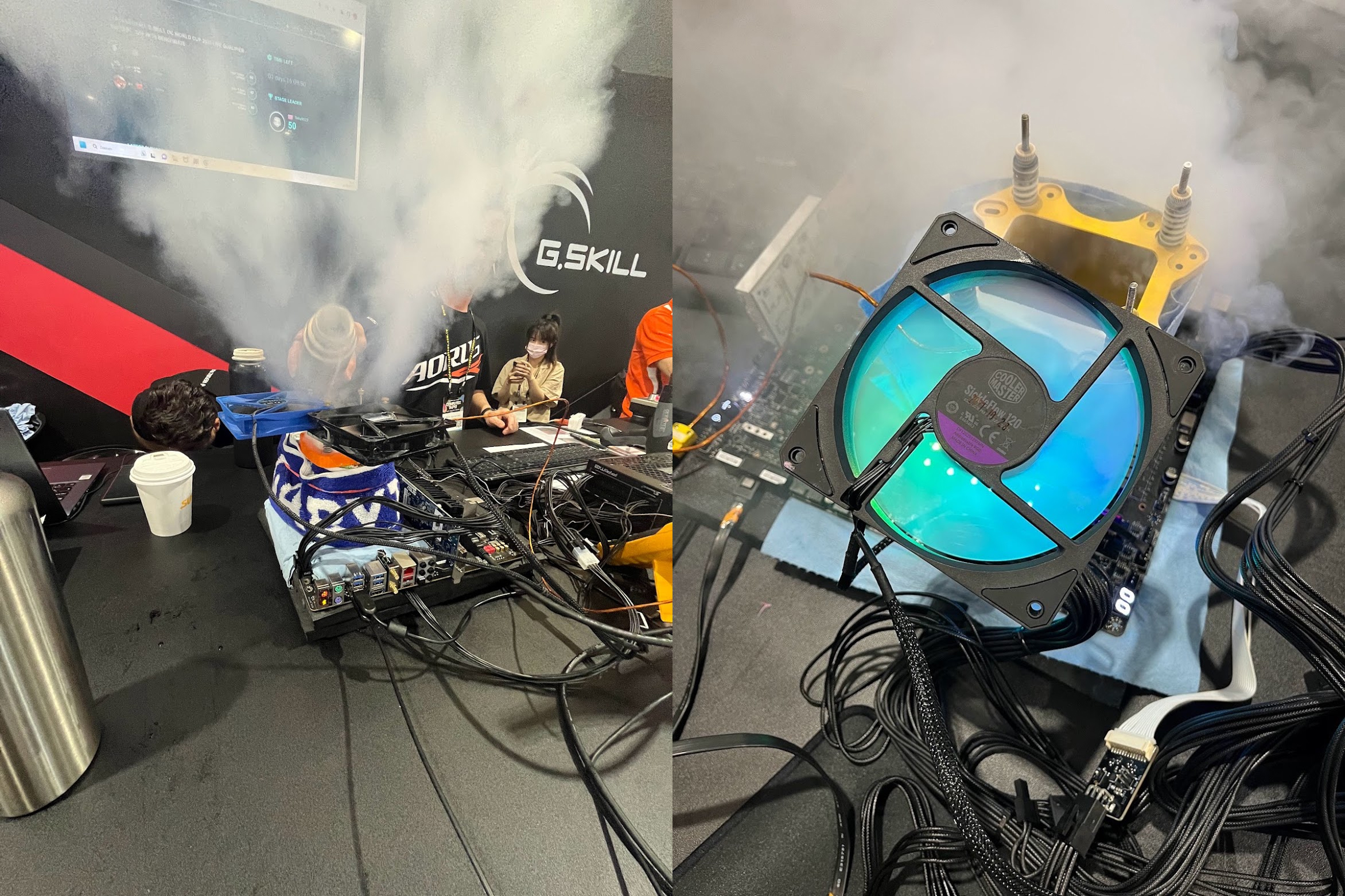
Somewhere in the middle of all this I found the liquid nitrogen overclockers, a small subculture with outsized influence. Overclockers push cooling past the point of sense: most gaming machines get by on air or water, but these people pour LN2, the coldest cryogenic substance you can buy without paperwork, directly onto the chip, chase a benchmark, and then it’s over. I watched frost climb up a copper pot on an open bench while a crowd filmed it on their phones. Lucky_n00b, an overclocker from Indonesia, put it to me like this:
“At the end of the day, extreme overclocking a PC is basically like turning your everyday car into a drag racer. With your regular car, you can cruise to work, run errands, whatever. But a drag racer? It’s built for one thing – a straight-up sprint. You push it to the max, then that’s it. Same deal with overclocking: you tweak the engine, crank up the power and silicon hard, but only for a short burst before it’s done.” (Lucky_n00b, Overclocker, Indonesia).
What I like about this is how honest it is about the uselessness. Nobody is doing this to get anything done; it’s a pure demonstration of power, briefly and expensively, for an audience.
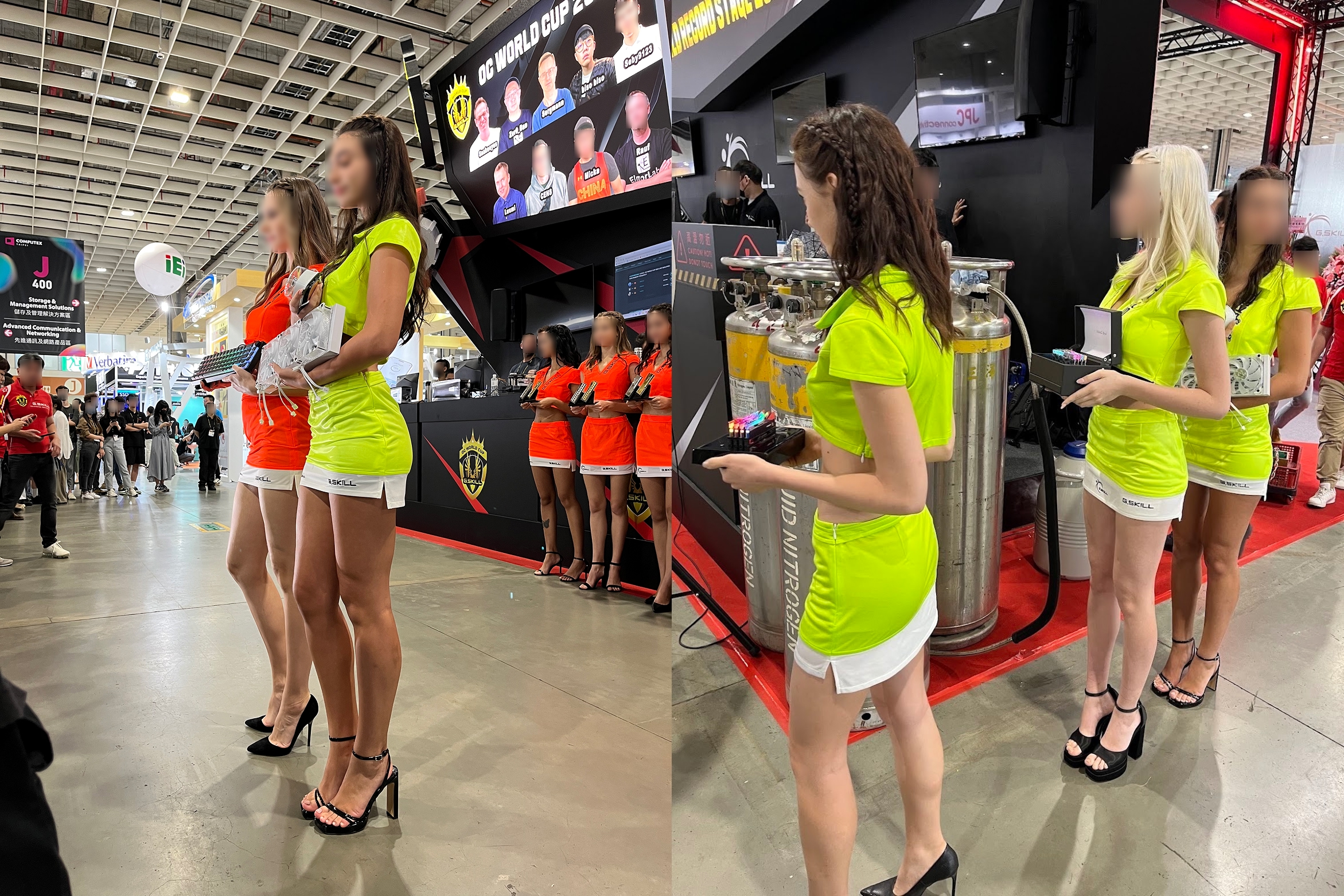
And there is always an audience, because the fair is built to produce one. Around the benches, hostesses hired by the manufacturers circulate with the new products: water-cooling tubes, GPUs, RGB fans held at chest height like prizes. Sexualised, obviously, and doing fairly transparent marketing work. But what I noticed at the LN2 benches was narrower and stranger than that. The women there had been made part of the decor. They weren’t attending the demonstration, weren’t explaining it, and weren’t touching the nitrogen. They were the finish on it, the surface that made a table of frozen copper and exposed cabling read as an event worth photographing.
Once I started paying attention to which bodies were allowed to stand where, the rest of the fair got much easier to read. A trade show is a spatial argument about who an industry believes it is, staged annually at enormous expense, and this one puts men at the front of the bench with their hands on the hardware and everyone else in orbit around them: carrying, presenting, smiling, decorating. You can walk the aisles and watch it repeat with almost boring consistency. Where men are demonstrating air cooling, case mods, gaming chairs, all the tuned and tinkered-with things, the women are in sales, or they are themselves the display: costumed, personified, drawn from the visual grammar of Asian anime cultures and installed beside the hardware as part of it.
The floor plan, in other words, is doing the same work as the archive. Ensmenger and Oldenziel find it in the historical record: women moved steadily out of the story computing tells about itself while remaining necessary to its actual functioning. On the fair floor the same arrangement is built at scale, in public, with lighting and a schedule. And it is the meme again, only walkable, with men making heat at the front, women arranged around it, care rendered as scenery. Standing in that aisle I started wanting a word for what was being performed, because “sexism in tech” was too blunt an instrument for something this specifically thermal.
It’s worth going back to the language Lucky_n00b reached for when I asked him to explain the appeal. Not a computing metaphor: an engine. A car tuned until it can only do one thing, driven flat out until it’s finished. Nobody put that in his mouth, it was simply the nearest available way of describing the pleasure, which suggests the two practices sit closer together than their hardware does.
Cara Daggett has named that closeness from the other end. Her term is petro-masculinity: the argument that fossil fuels have stopped being merely a source of energy and become a way of holding together a masculine and patriarchal order that senses it is under threat. The pleasure is less in what the fuel does than in burning it loudly, wastefully, in front of people who would rather you didn’t. What keeps that pleasure intact is a particular story about the ground: that the earth is an inexhaustible supply, indifferent to how hard you draw on it, and that drawing on it hard is more or less what a man is for.
Run that story on electricity instead of diesel and you get what I’ve started calling thermomasculinity. The substrate changes to silicon, grid, nitrogen, and behind them the water and rare earths and coal nobody is exhibiting at Nangang. The posture is identical. The bench is a small theatre of inexhaustibility. Pour on more nitrogen, push more watts through the die, and if the die dies there is another one in the box. What’s being demonstrated isn’t cooling, or even skill; it’s the right to overdraw, and the confidence that the account cannot be closed. The women arranged around that bench are part of the demonstration too, because a performance of limitlessness needs an audience it can be limitless in front of, and it needs someone else to hold the room together while it happens.
Which is what the meme was complaining about all along, once you take the money out of it. Nobody is genuinely upset about the price of the tower. They’re upset that a machine capable of enormous heat is being kept cool: The Sims doesn’t spin the fans up, nothing throttles, the loop sits there being decorative.
The machine is being used within its means,
and being used within your means reads, in this economy,
as failure.
Cooling is where the whole thing hinges. When it is quiet and continuous and keeps a system alive for years, it is maintenance, it is care, it is the work of staying inside a limit, the same work the hostesses were doing to that room and the Computer Girls were doing to the mainframes, and nobody films it. When it is cryogenic and spectacular and exists to license one more degree of overdraw, it becomes engineering, and there’s a crowd with their phones out. Same thermal labour, split down the middle. And the machines get hotter every year, which this industry still treats as a cooling problem rather than a question about how much heat anyone intends to keep making.
Related Cases
2.3 On Cultural Organizations
Open case Read caseDeveloping cultural infrastructures across institutions and independent organizations: Centre d’Art Contemporain Genève, Pinacoteca G.A. Levis Chiomonte, Arteco, Nova Express Magazine, Kabul Magazine, Barriera, Karussell, Treti Galaxie, Palazzo Irreale, Painters Painting Paintings.
2.2 On Fashion Brands
Open case Read caseDeveloping cultural and creative systems within fashion brands: Missoni, Aspesi, Marsèll, K-Way, Muso.
2.5 On Businesses
Open case Read caseBringing artistic value into business structures: Simplify, Oliaros, Jar, Vespignano.