 Close
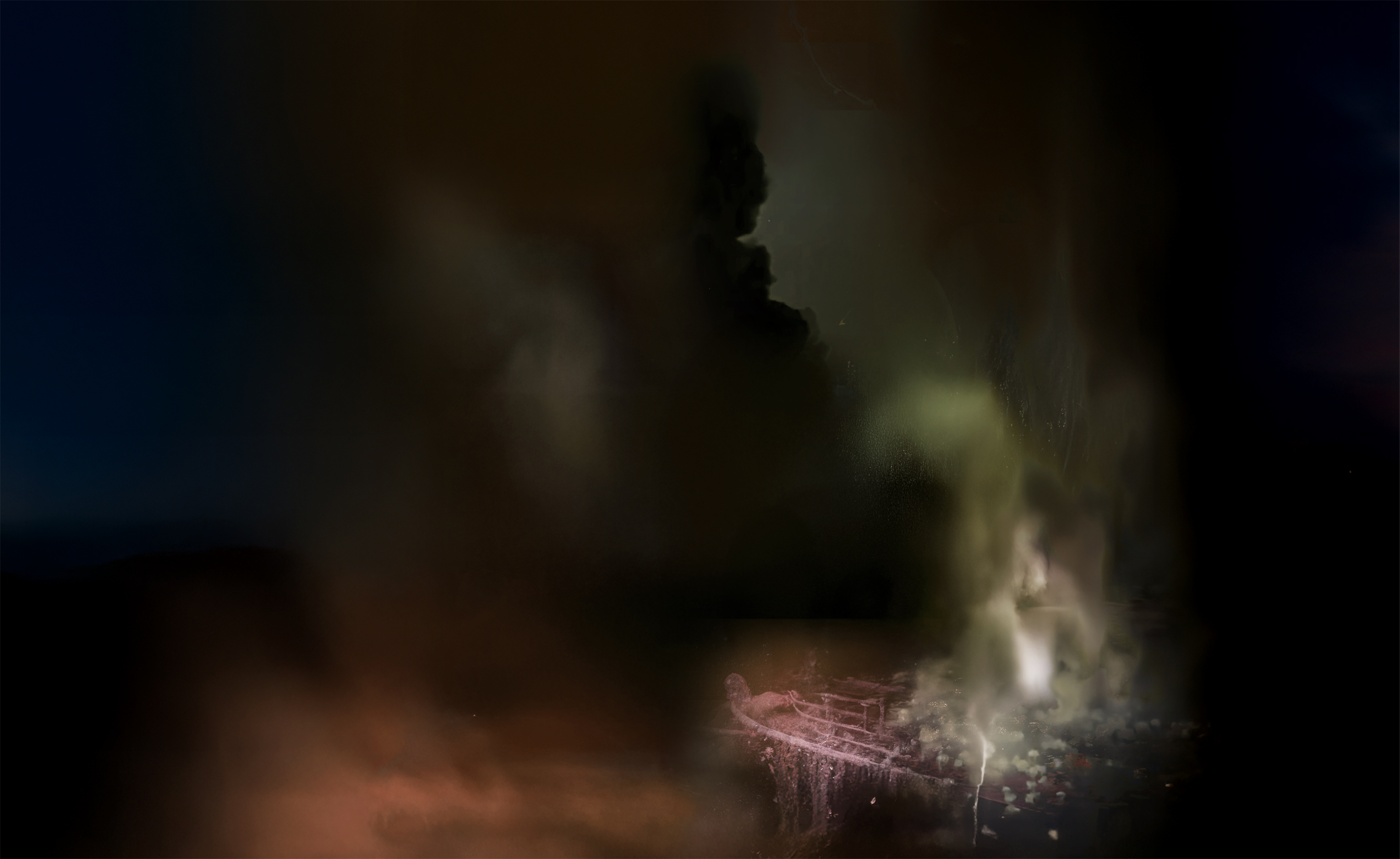
Nothing runs dryYuyan Wang on humidity, embodiment, and the metabolism of images
Yuyan Wang is a filmmaker and multidisciplinary artist born in Qingdao, China, and currently based in Paris. Working between film and installation, she focuses on the industrial production and perpetual circulation of images, in which found footage, digital content, machines, bodies, and landscapes are continuously recycled into one another. Her practice begins with images that have already lived elsewhere: operational, promotional, scientific, or spectacular, produced to perform a function and then released from it through montage. These materials are reclaimed by altering their gait, slowing down their circulation just enough for other intensities to surface.
This way, Yuyan Wang’s films turn the sterile landfill of the image economy into a place where fragments decay, contaminate one another, and return in another form. They seem to emerge from this exact friction: suspended between the virtual and the visceral, they follow the flow of minerals and pixels that brings archival work to life, almost developing a metabolism of its own. Wang investigates how to inhabit these hypermediated landscapes at the speed of a wayward eye: lingering, wandering, getting distracted, following cues and associations. It is a practice of sensual materialism, one in which the digital never fully dematerializes, where machines become wet, fallible, and alive, and every image remains entangled with the matter through which it moves.
Zoë De Luca Legge: The first time I had the chance to see one of your works live was this year in Venice, within the Canicula group show at Fondazione In Between Art Film. Boring Billion (2026) is composed entirely from existing online footage. In a present of infinite digital content, an increasing part of which is AI-generated, how do you approach the act of finding as a creative gesture? Does the energy of this source material matter to you, or does it become neutral, amorphous matter once it enters the digital stream?
Yuyan Wang: Every image arrives, for me, with a previous life. By the time I bring it into a film, it already carries traces of what it was made for, where it has circulated, and how it was intended to act on us. I don’t want editing to erase that history. On the contrary, I’m interested in keeping those forces active within the image. It is precisely the tension between what an image was made to do and what it can become in a new context that gives it its energy.
In Boring Billion, for example, much of the material comes from industrial, technical, and operational contexts. Most of these images were originally produced to perform a task, or to promote and celebrate automated systems. They belong to a visual culture organized around productivity, efficiency, and instant output. Montage does not erase the original function of these images, it simply loosens their grip. A tutorial no longer has to instruct. An advertisement can become melancholic. A scientific image has no need to prove anything. Something designed to embody efficiency can suddenly reveal vulnerability or exhaustion. Once released from its original task, an image becomes malleable again, allowing other meanings, affects, and desires to emerge
I’m more interested in what becomes perceptible in that opening. This is also where the body becomes very essential for me. My way of working is very manual, physical, and intuitive. It depends on subjective attention. That physical intensity allows me to move through the digital stream at the speed of the body, with all its friction and limitations.
Algorithms tend to direct us toward the strongest, fastest,
and most predictable signals. The body follows a much less
efficient logic. It hesitates. It wanders. It makes detours.
It develops attachments or becomes distracted and tired.
They make me more attentive to weaker signals: images, gestures, textures, or connections that may have been overlooked, devalued, or left outside the dominant circuits of attention. I feel those detours matter because they create the possibility of encountering something that was not already predicted, optimized, or organized for us. I think the creative gesture in my work has less to do with producing new images than with finding a path through an already saturated visual world.
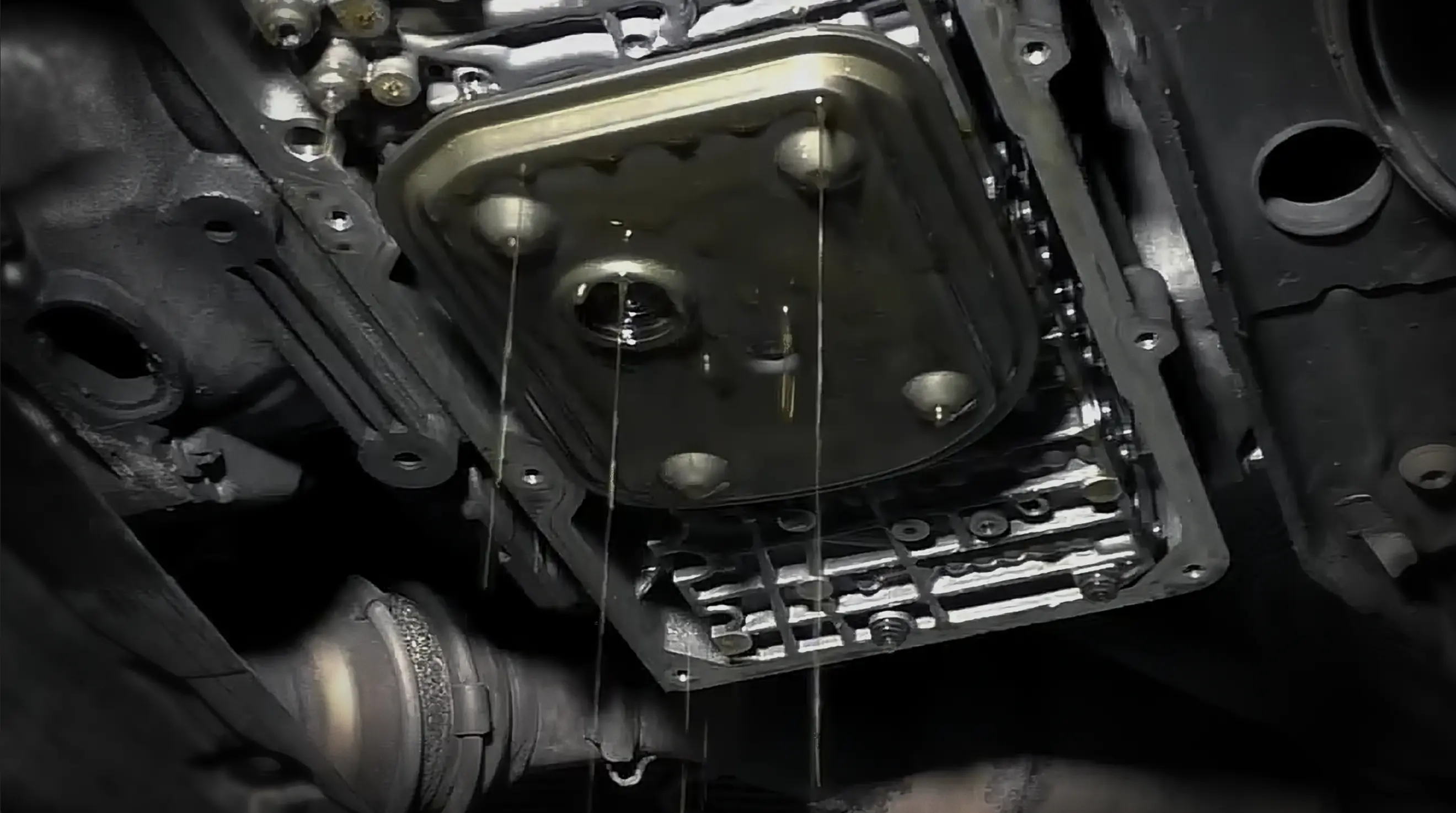
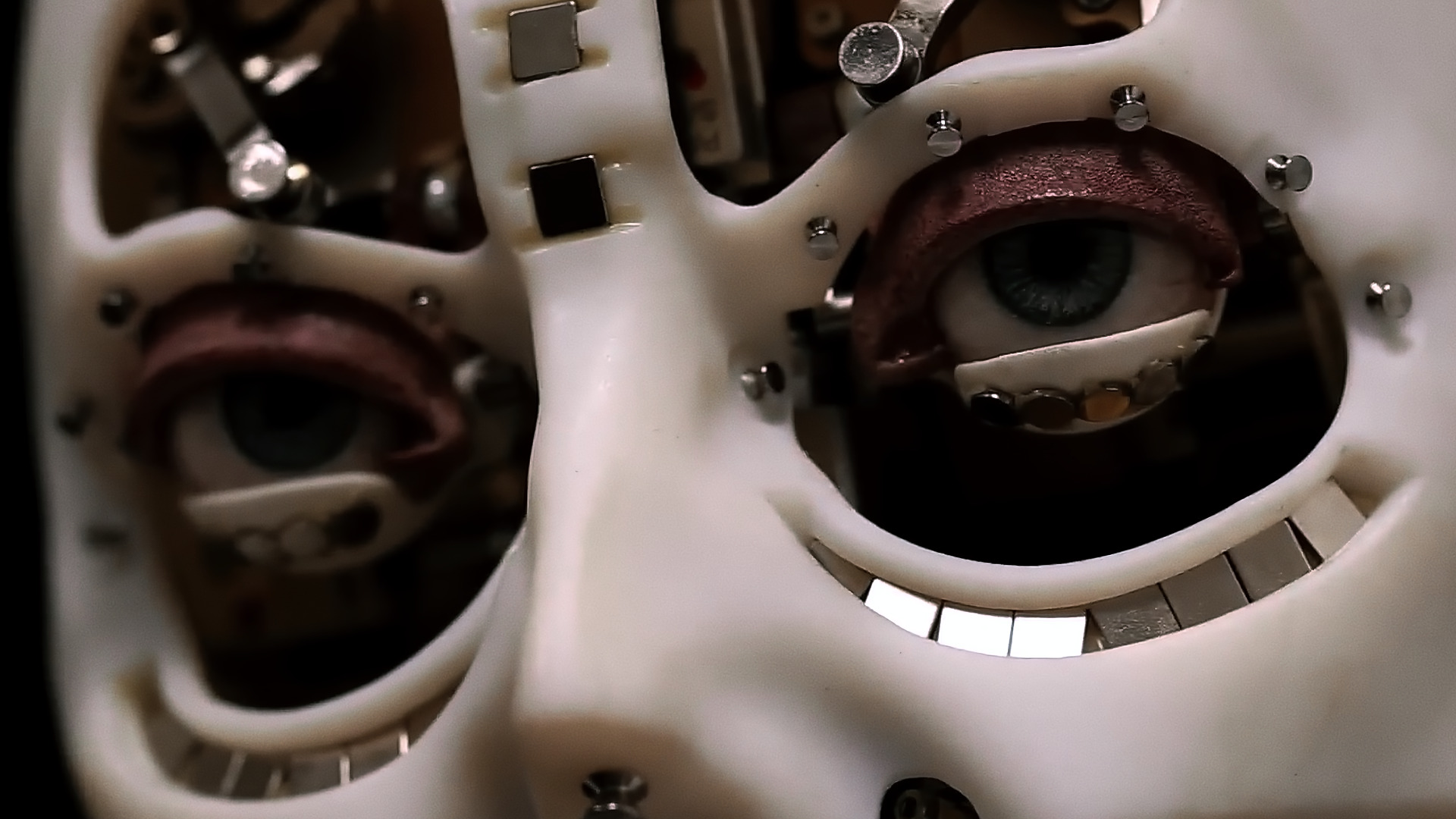
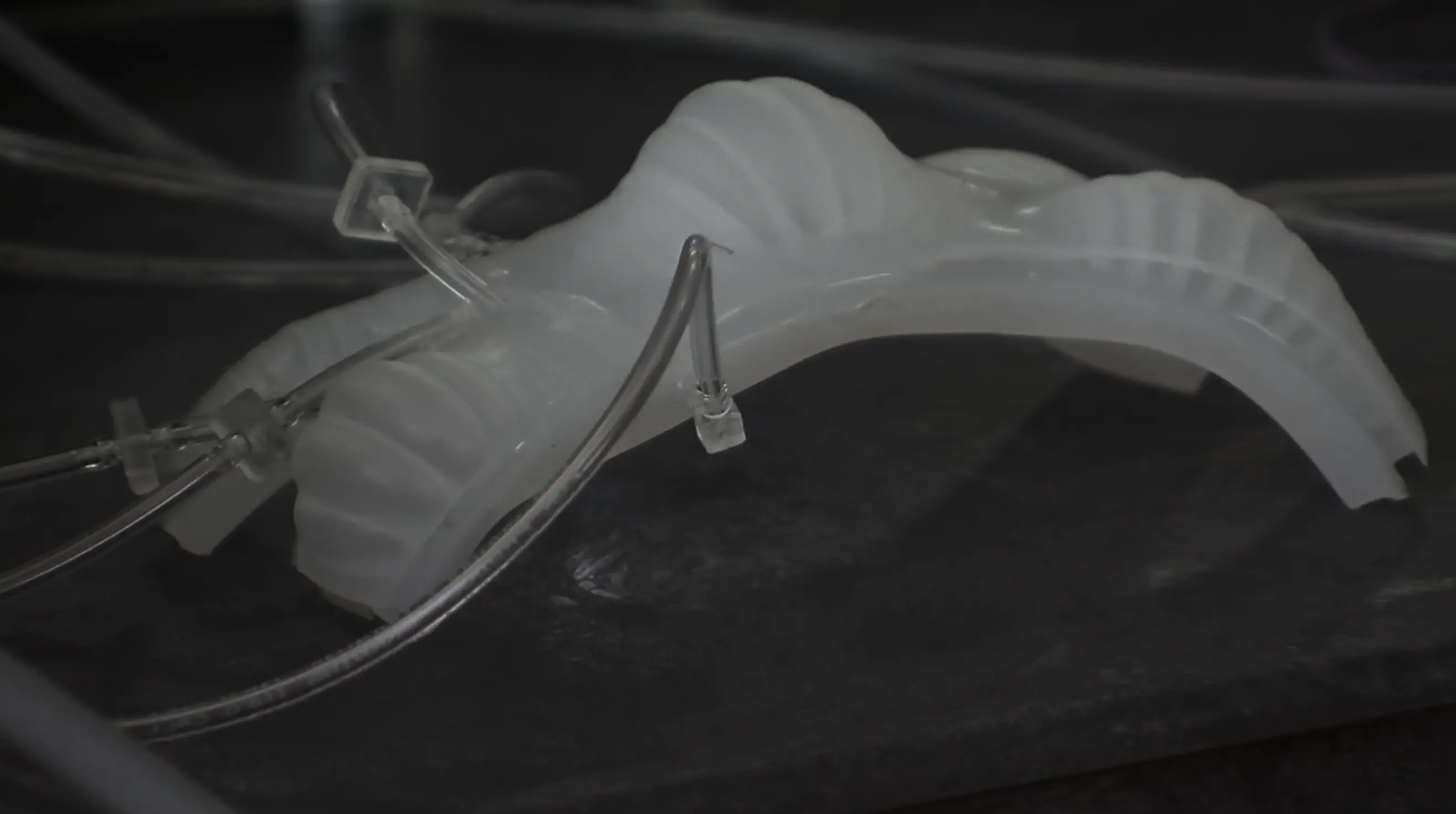
ZDLL: Digital and robotic subjects are often described as somehow sterile, even dry. Yet this work opens with a montage focused on viscous compounds that generously lubricate gears, allowing them to glide erotically together. The choreography becomes increasingly intense, almost organic due to its wetness, and then introduces us to a sequence of animal-like robots, both human and non-human. What does the introduction of this fluid, corporeal element, combined with the choice to use DeBarge’s All This Love song as the background music, tell us about the way machines become sensualized, or acquire a kind of subject-like presence?
YW: The DeBarge song shifts these images into a completely different affective space. Suddenly, an industrial demonstration starts to look like a choreography of courtship, something intimate, dependent, even slightly sensual. For me, that sensuality emerges relationally through the editing process, through the connections formed between textures, movements, emotions,rhythms, and through the way these relations are perceived across duration, repetition, friction, and proximity.
I imagine Canicula as the internal heat of a machine that has been running for too long. It is driven by the old technological fantasy of perpetual motion, always rotating, accelerating, upgrading, pushing beyond its own limits. In the film, lubrication makes the material and physical conditions of automation visible. The fluid keeps the gears moving, but it also makes them look almost organic, like organs rubbing against each other. At that point, the machine begins to feel less like an abstract technical system and more like a body, feeding on its own images, residues, and failed promises of efficiency. Behind every apparently seamless movement, there is friction, heat, viscosity, exhaustion, and constant maintenance.
We teach machines to perform life,
and machines teach us how to perform ourselves.
And beneath the apparent novelty of robotics
lies a very old fantasy:
the desire to overcome the limits of the body.
So to my mind, the film is less about future machines than about the afterlife of expired futures, the persistence of old technological dreams and human desires inside each new system. And ultimately, that brings us back to very old questions: what a body is, what we want it to become, and what we are willing to give up in order to exceed it.
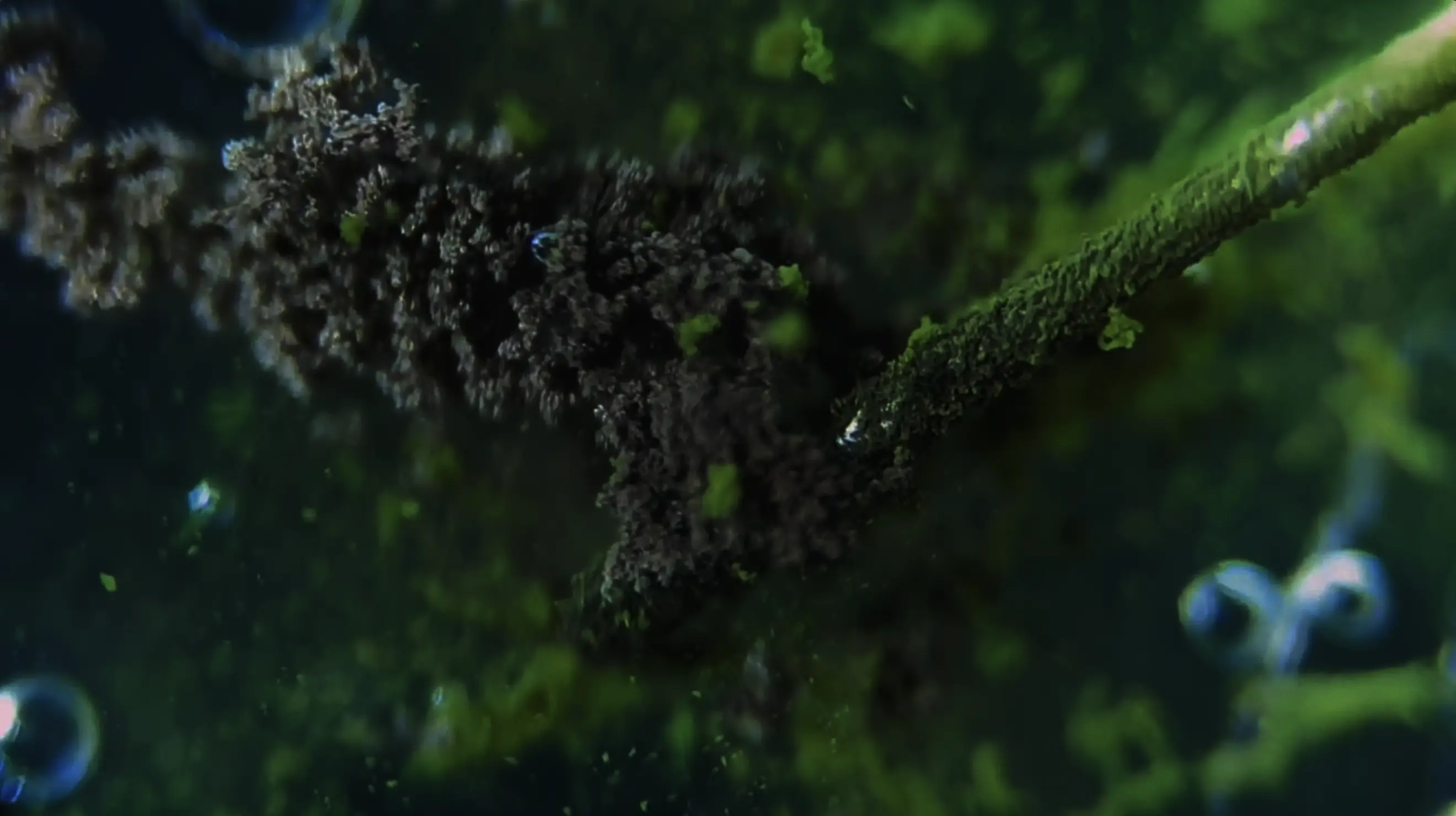
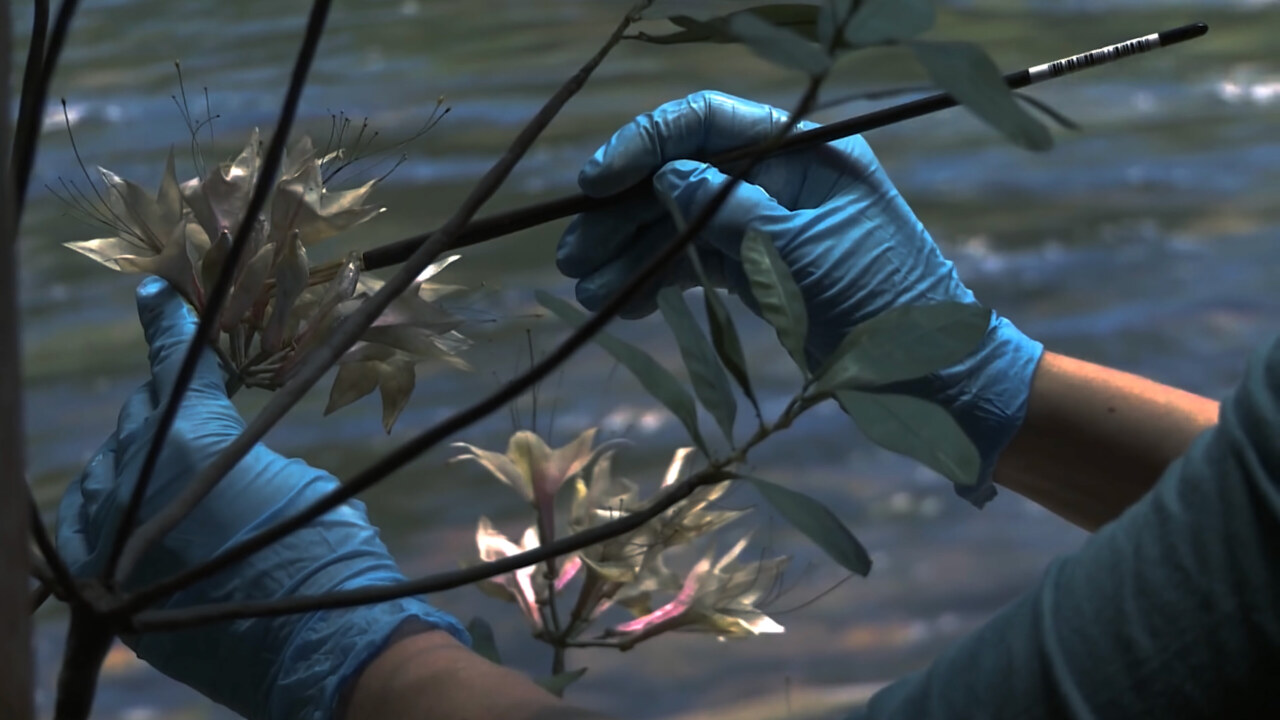
ZDLL: Another work where you used viscosity to explore the ambiguous boundary between organic and synthetic is Green Grey Black Brown (2024). Here, oil epitomizes the contradiction whereby a petrochemical liquid is used to produce plastic plants, while its extraction irreparably damages the ecosystem of real ones. Somehow, petroleum appears as melancholic amniotic fluid, connecting the plastic leaf back to the ancient swamp it came from. Do you think we’re already trapped in a synthetic eternity where nature is destined to exist only as a fossil-fueled replica?
YW: I like your description of petroleum as a “melancholic amniotic fluid.” In Green Grey Black Brown, this melancholy takes the form of a viscous material loop. Ancient organic matter is compressed into petroleum over geological time, then extracted, refined, and polymerized, eventually re-emerging as its own synthetic double. The artificial plant runs through the film because it is both an object and an image. It is a petrochemical commodity, but also a cultural representation of what nature is supposed to look like. This is where the circulation of matter meets the circulation of images. Here, the artificial plant and the digital image operate through a similar logic: both compress complexity into a recognizable surface designed to circulate, something that can be moulded, optimized, transported, and endlessly replicated. It is an image of life redesigned not to need a world.
In the film, I try to unfold these images like a moving landscape scroll of the present, allowing its contradictions to remain visible. The scroll functions almost like a form of stratigraphy, bringing geological, industrial, and digital time onto the same surface. Some of the documentary footage may resemble science fiction, but it does not project us into a distant future. For this reason, I do not imagine this landscape as a harmonious symbiosis. Organic life, synthetic matter, machines, and images continually transform one another, but this contaminated coexistence emerges from unequal relations of labour, infrastructure, extraction, and exposure. This synthetic eternity is not inevitable, it is being actively manufactured. What must be challenged is precisely its appearance of inevitability. The danger is not that the replica will literally replace nature, but that the fantasy of replaceability makes destruction appear compensable.
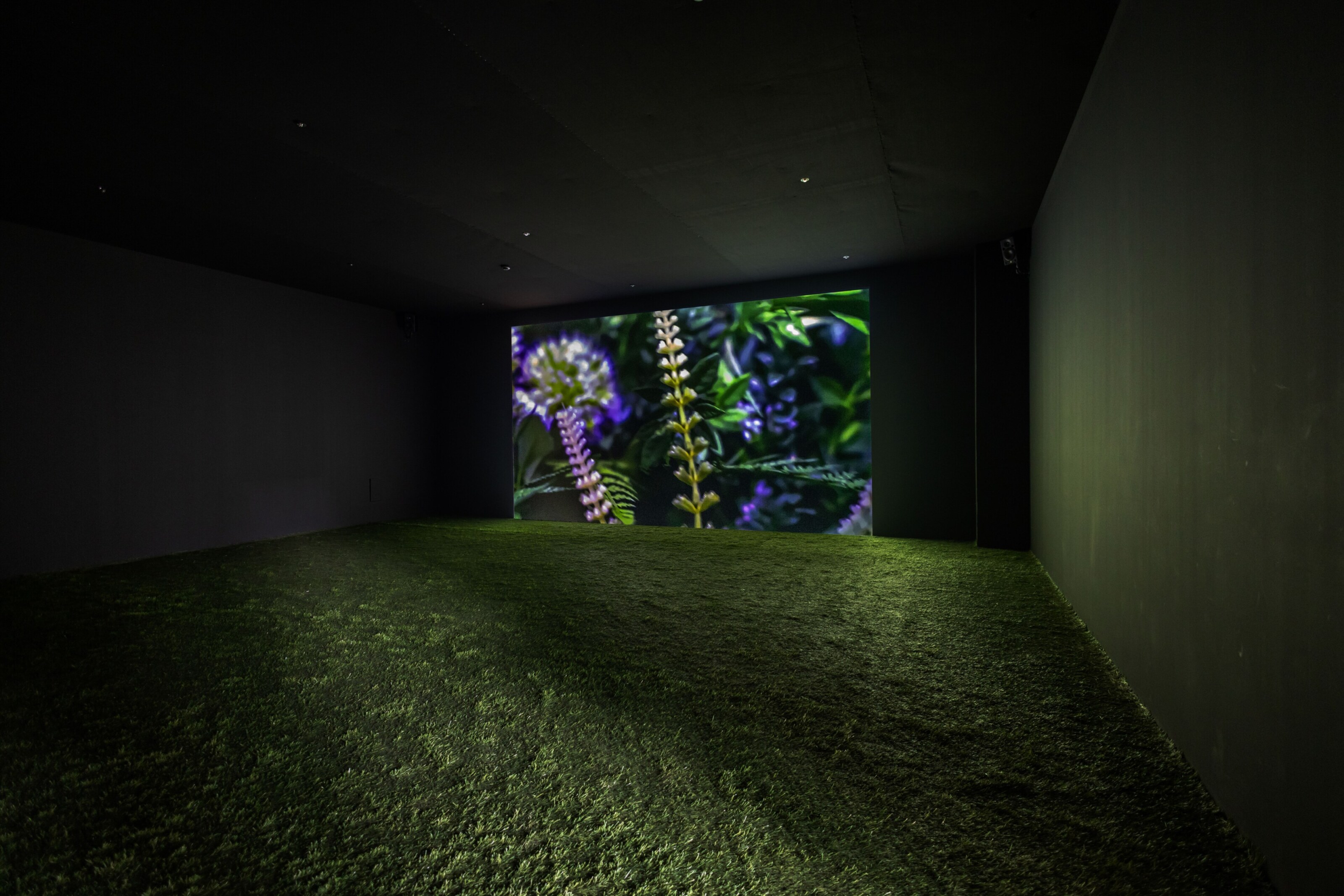
ZDLL: The video depicts landscapes linked by the presence of entertainment, development, and mining industries. Here too, I find a paradox: that of artificial recreational environments and the spectacle of nature, which are based on extractive dynamics towards the Earth, and at the same time are fueled by the extraction of attention and wonder from those who enjoy them. Where does the film position us as viewers? Are we victims or willing participants?
YW: I think the film tries to place us inside this infrastructure rather than in front of it. Our gaze itself becomes part of the infrastructure. Our body isn’t simply the endpoint where an image arrives. It’s one of the places where the image is processed, altered, stored, and eventually sent back into circulation. And of course, we don’t enter into this circulation on equal terms.
A lot of the conditions through which we encounter images have already been designed to extract value from our attention, while the power to shape those conditions is very unevenly distributed.
We are already inside it, physically and perceptually. What interests me is what we can do from within that implication.
That is partly why I’m drawn to pre-existing material: to begin from within this condition, with images that are already circulating and charged with context and intensity, and to find ways of inhabiting that circuit differently. Through montage, these fragments come into contact and begin to contaminate one another, producing connections that neither the original images nor I can fully control. Perhaps my version of cinema begins there: through altering the way they pass through us, and through negotiating a perceptual, affective, and political relationship with the images that continue to inhabit us.
ZDLL: You note that these environments systematically empty life from nature. By extracting our wonder, do they also systematically empty something from us as spectators—a capacity for authentic astonishment, for patience, for deep observation? Does the film propose that the ecological crisis is inseparable from the crisis of the human sensorium, where our interior landscapes are as degraded as the exterior ones?
YW: I often imagine this as moving like an animal through a dark forest. An animal doesn’t need to see the entire forest in order to find its way. It becomes sensitive to very small changes in its environment, a smell, a vibration, a shift in temperature, a distant sound, a trace left by something that has already passed. Its orientation comes from bringing these weak and partial signals into relation.
In my work, editing works in a similar way. When I move through thousands of images, I’m not only asking what they mean or what information they contain. I’m looking for affinities between them: a particular movement, a texture, a rhythm, a colour, an emotional intensity. Very often, the body notices these connections before I can explain them intellectually. Montage becomes a way of following that sensation and seeing where it leads. Montage is not simply a tool for making images. It is also a perceptual practice in itself. It trains me to remain sensitive to signals that might otherwise disappear inside the noise, and to follow relations that an algorithmic classification might consider irrelevant. I’m interested in intuition as another form of knowledge, one that emerges not as something irrational but through accumulated bodily attention. The more I edit, the more the body becomes a kind of sensor.
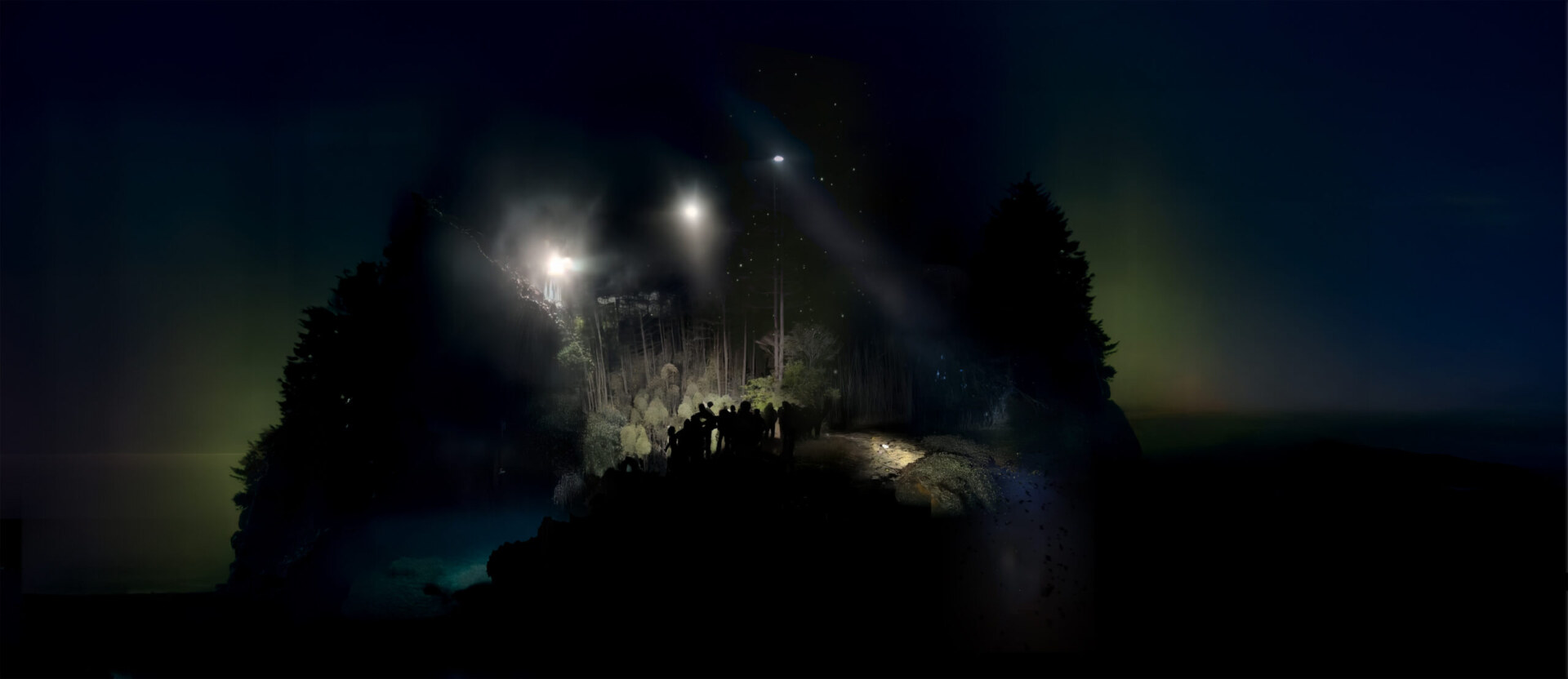
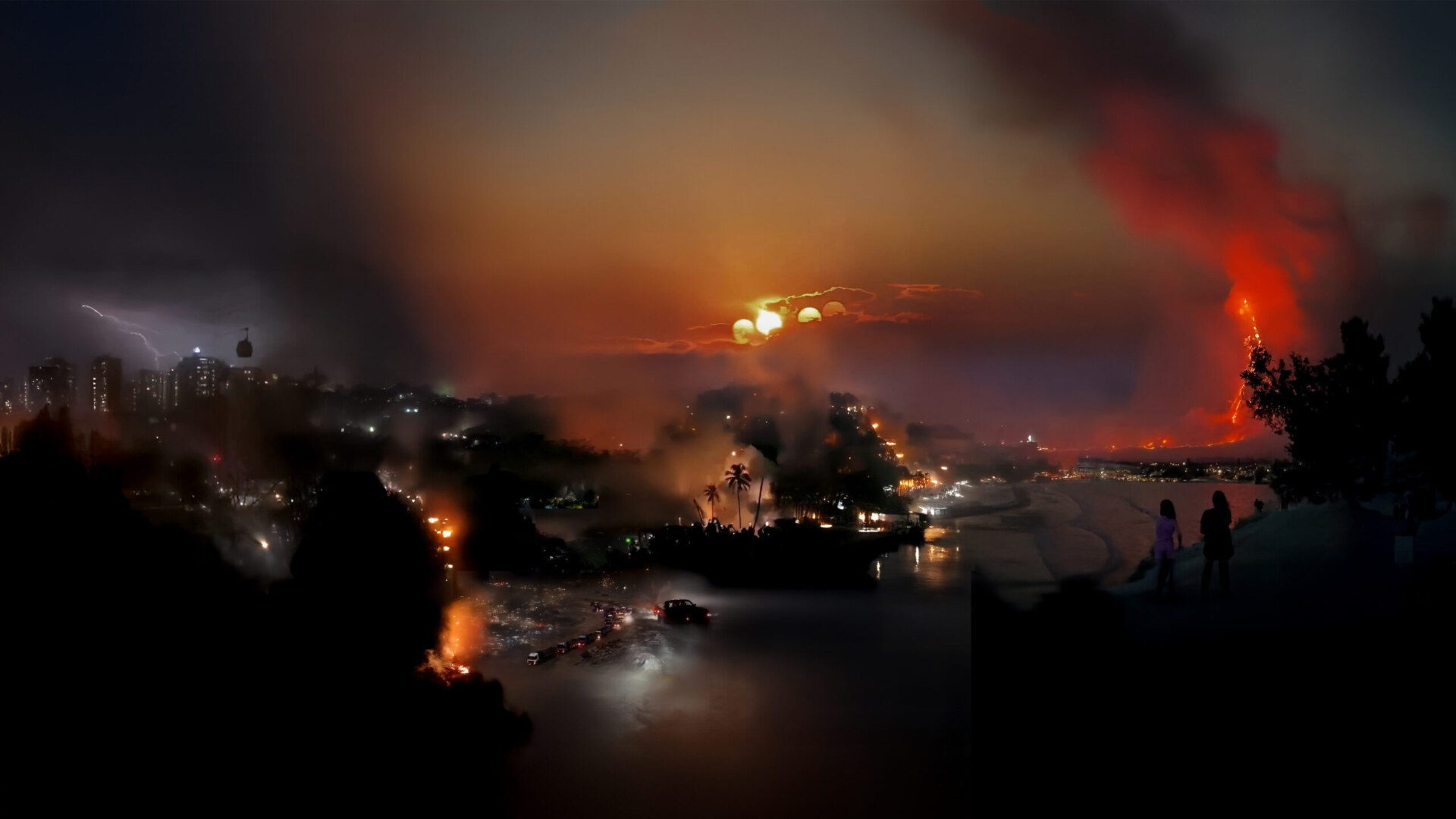
ZDLL: Talking about the climate crisis makes me think of another recent work of yours, Weather (2025). The project draws on an extensive collection of weather images circulating on social media, which you arranged across vertical screens to create a fractured horizon. Does it perhaps reflect the very structure of the way we experience climate change today—a series of elusive, disconnected events that we cannot grasp in their urgent entirety?
YW: I think there’s a paradox at the heart of Weather. Climate change happens on a scale that exceeds individual perception, so what reaches us are always fragments, partial signals of a much larger transformation. We encounter it through specific events, but also through the media systems that make those events visible and sensible to us. They also shape how climate is felt, visually, emotionally, even psychologically.
The footage I encounter through social media both bridges that gap and makes the gap itself more apparent. Through these images, we drift between countless local horizons : a storm here, a strange sky somewhere else, a flood, a fire, an unfamiliar atmospheric phenomenon. Individually, they remain fragmented, but as they accumulate, something almost panoramic begins to emerge. We can witness events unfolding almost simultaneously across completely different parts of the planet. And at a certain point, the images themselves begin to behave almost like weather. They circulate, accumulate, intensify, disappear, and sometimes return in altered forms. So they are no longer simply representing atmospheric events. Together, they start to produce an atmosphere of their own, a kind of image climate that we are already living inside.
In a way, I think this produces a strange fractured version of the astronaut’s overview effect. The astronaut looks back at Earth from a distance and sees it as a single, continuous body, which can produce this very powerful sense of wholeness and interconnectedness. What we experience through networked images is almost the opposite: there is no single viewpoint, no unified image. And yet, through thousands of scattered viewpoints, we begin to perceive the planet at a scale that was previously impossible.
That contradiction is really important to Weather. I don’t want to resolve it or reconstruct a complete image of the climate, because I don’t think such an image is ever really available to us. What interests me more is the physical experience of trying to orient ourselves within something that exceeds our perception, how the body navigates these scattered unstable signals without ever reaching a total view.
ZDLL: Would you say the cinematic gaze is a form of resistance, or does it risk becoming just another sophisticated apparatus for extracting our contemplative attention?
YW: I think it can be both. Attention is already a resource. Even contemplation itself can be captured and converted into cultural or economic value, and cinema is trying to extract it just as efficiently as any other apparatus. There is no clean outside from which cinema can be purified, but I feel that its strength, and its resistant potential, lies in what it can do to attention once it has captured it.
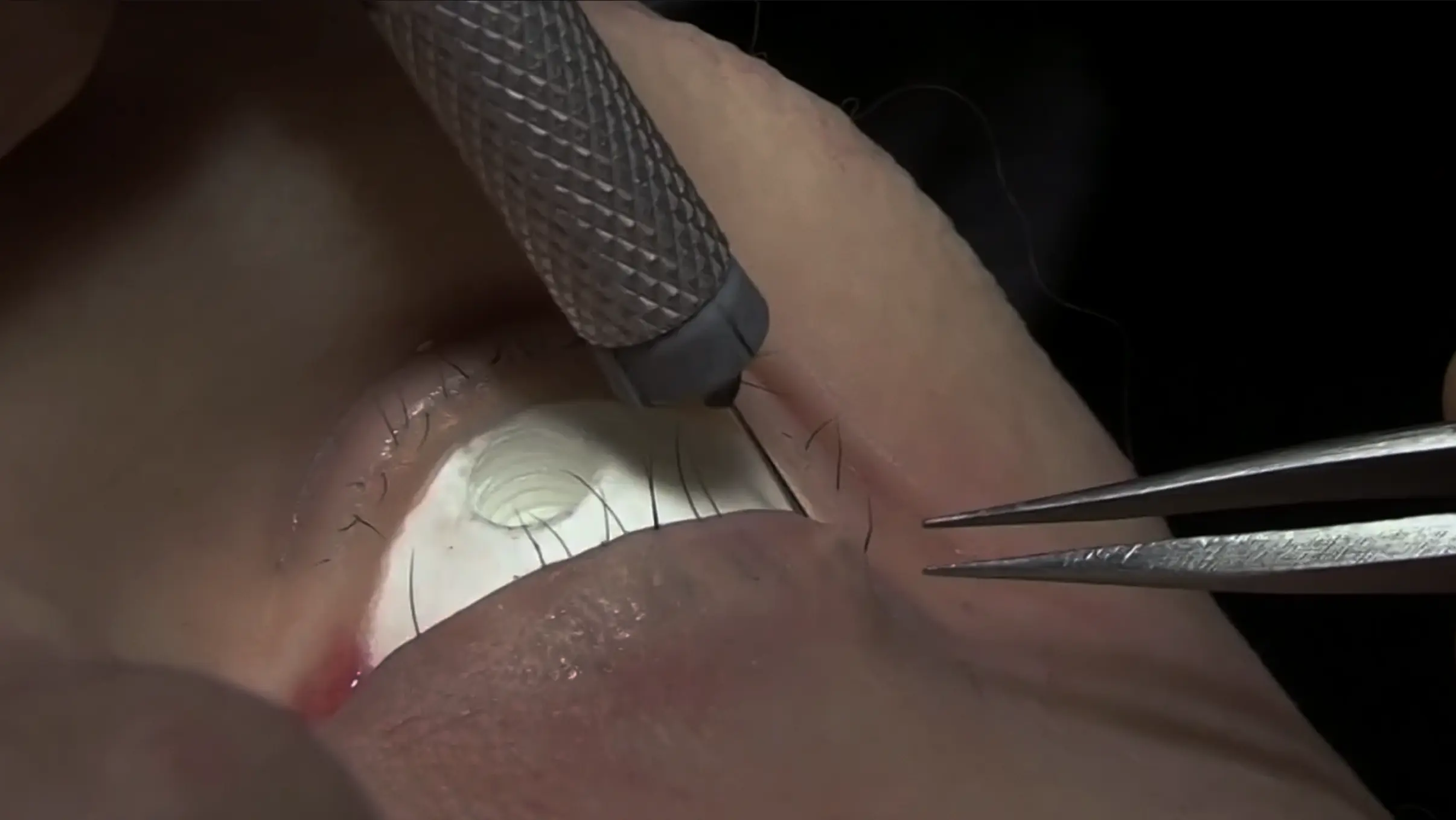
What I still find powerful in cinema is its physical and sensual dimension. When images are designed to pass through us almost instantly, cinema can make them stay with us long enough to change their state, and perhaps ours as well. I often think of this through metabolism. Our body is not simply a screen receiving images, it is a membrane that transforms them.
Almost like photosynthesis, images enter as light
and are converted into sensation, memory, imagination,
and fantasy. They leave affective residues
that remain active within us.
That is also why montage feels very close to composting to me. I imagine myself working inside this enormous, ever-expanding landfill of existing images, bringing neglected fragments back into contact until they contaminate one another and begin to shed their assigned functions. Their residual energies accumulate, decay, ferment, and eventually return in another form. Perhaps, then, cinema’s resistant potential lies in changing the metabolism of attention itself, from consumption into transformation.
Related Cases
2.4 On Artists
Open case Read caseDeveloping identities, platforms, and contexts around artistic practices: Paola Pivi, Julia Krahn, Sara Enrico, Riccardo Baruzzi, Tiziano Martini, Viola Leddi, Emilio Fantin, Grace Prince, Ramona Ponzini, Andrea Magnani, Variante Artistica, Altalena, Resign.
2.1 On Art Galleries
Open case Read caseA narrative across producing communication for art galleries, featuring: Secci, Clima, Galleria Massimo Minini, Francesca Minini, Renata Fabbri, Notte, The Ryder Projects.
2.3 On Cultural Organizations
Open case Read caseDeveloping cultural infrastructures across institutions and independent organizations: Centre d’Art Contemporain Genève, Pinacoteca G.A. Levis Chiomonte, Arteco, Nova Express Magazine, Kabul Magazine, Barriera, Karussell, Treti Galaxie, Palazzo Irreale, Painters Painting Paintings.