 Close
Thinking with the LagoonListening practices
The world “holds” the memory of all traces; or rather, the world is its memory (enfolded materialization).
Karen Barad, Nature’s Queer Performativity
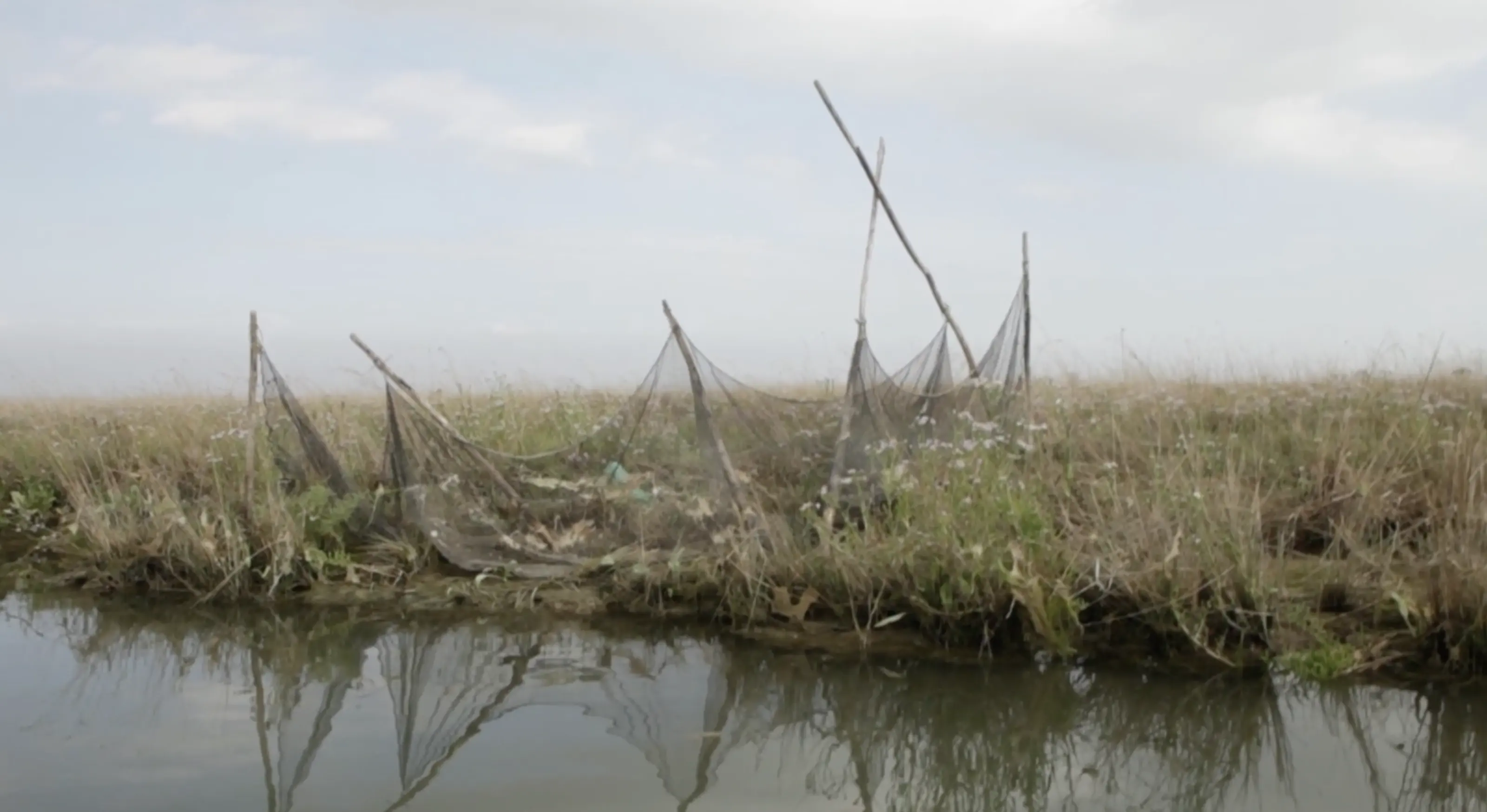
One afternoon in March 2023, while taking a voga longa rowing lesson in the southern lagoon near Giudecca, I boarded a caorlina for the first time. A traditional Venetian boat, supposedly originating in Caorle, it was once used to transport goods and materials and is known for its carrying capacity and speed. From this vantage point, I felt I was seeing Venice through different eyes: as part of a whole, deeply connected to the water. I realized that Venice was not simply the extraordinary architectural landscape I walked through every day, but the entire lagoon. The experience made me reflect on the privilege of living in a landscape so closely bound to water, but also on the harm my presence caused these waters, and on the different ways we might learn to co-inhabit this place. It prompted me to question more deeply the waters I crossed every day and to explore a body of research offering new ways to understand the relationships between bodies, environments, and artistic practices.
During my years of research at Iuav University of Venice, I often found myself reflecting on water, increasingly engaging with recent studies that examine landscapes from a hydrological perspective, including the theories developed within the Blue Humanities and the philosophical current known as hydrofeminism, articulated by Astrida Neimanis. The Blue Humanities call for a reconsideration of the relationship between human beings and aquatic environments, placing oceans, seas, rivers, and lagoons at the center as sites of cultural, historical, and political production. Hydrofeminism, meanwhile, invites us to recognize our material and affective interdependence with water, conceiving of the human body as part of an aquatic continuum with the world around us. These fields of inquiry shift attention toward liquidity and, consequently, toward a fluid understanding of intra- and interspecies relations.
My research stems from a desire to understand how water might become an epistemic subject and a companion in thought and practice at the intersection of art, ecology, and territory, starting from a lived experience of the Venetian lagoon. The intention is to move slowly, listening to the waves in an attempt to attune to their movements and to the drastic changes that have radically transformed the lagoon in recent years, driven by wave motion, pollution, and invasive engineering structures that have disrupted its microcosm.
Who inhabits Venice? What kind of relationship develops with the waters of this city? What possible futures might open up within this amphibious landscape? Venice is often portrayed as a city overwhelmed by tourism, a city with no hope left, romantic on the one hand and decadent on the other. The dominant narrative surrounding the city must be dismantled to make room for different perspectives, ones that take the more-than-human into account.
Following the currents of the lagoon, the phases of the moon, and the ebb and flow of the tides, we find ourselves immersed in an increasingly expansive space. Venice can only be understood as part of its lagoon, with which it weaves countless interspecies relationships. It is a changing landscape, shaped by relations. Coming into contact with its waters reveals how deeply they have influenced the city’s social and political dynamics. The lagoon landscape has been profoundly shaped by human intervention. The diversion of rivers, for instance, helped prevent the lagoon from turning into either a stretch of dry land or open sea. As Serenella Iovino and Stefano Beggiora have written,
the water city makes such a compelling case study perhaps because it exists within a double condition: “it is inscribed in a nature that it has altered and on which it depends entirely,” a nature that is increasingly slipping beyond human control.
Recent interventions have become increasingly invasive, cutting through the seas and leaving open scars in the water. Projects such as MOSE have destabilized the lagoon ecosystem’s natural functioning, contributing to the disappearance of several species and transforming its rich, varied landscape of salt marshes, wetlands, and brackish areas, which once naturally slowed the incoming tides.
This research inevitably leads to a growing awareness of the climate emergency and the need to act. The lagoon offers many opportunities to engage with these issues by considering it as a whole: a dense network of people working together to keep a message alive. It is a shared, ongoing call from those seeking to reclaim the spaces of a city that seems to have been overtaken by commerce and to demand their rights.
This context connects with recent research exploring aquatic spaces as densely relational environments. In particular, the lagoon islands are considered here not as isolated places, but as part of what is known as an aquapelago. Coined by Island Studies scholar Philip Hayward, the term refers to a group of islands engaged in cultural and social exchange, where water plays a central role and reshapes affective relationships by connecting people to the aquatic spaces they inhabit. These land formations are considered through the ties they establish with the surrounding waters, understood as sites of connection within a socio-geographical map whose characteristics shape everyday life. In this habitat, it no longer makes sense to distinguish life on land from aquatic life, since the two influence one another and belong to a larger whole.
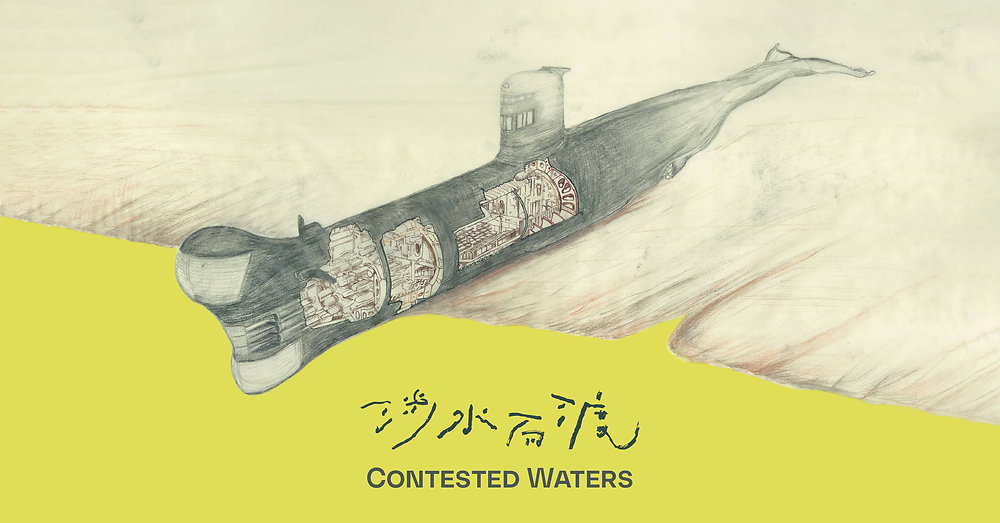
This perspective broadens the horizon of thought toward what has been called “a world of islands”: a planet conceived not as islands scattered across a vast ocean, but as a vast ocean connecting those islands.
As microcosms of the world, islands help us understand the vulnerabilities and challenges that demand our urgent attention. Venice can be seen as a planetary kaleidoscope, whose workings and difficulties offer a way to interpret the world. Its unique intermingling of land and water creates an environment that reflects the dynamics of the Anthropocene.
Venice is increasingly threatened by the very waters that once protected it, as demonstrated by the Acqua Granda of November 12, 2019, which confronted the city with its inability to act and left behind a collective trauma that has been difficult to overcome. These extraordinary flood events, caused by the combined effects of rising sea levels and land subsidence, are now occurring with alarming and growing frequency. As environmental anthropologist and researcher Giulia Repetti points out, the steps leading down to the lagoon can be read as indicators of this phenomenon. She warns that if “we simply acknowledged their presence and learned to read them precisely, we would begin to notice the stories of the past and present that they whisper, emerging as harbingers of indisputable change.”

At the same time, Venice is a place of encounter. Its fluidity encourages openness and discovery, creating a relational dimension that is difficult to find elsewhere. It is a city where walking is unavoidable, and so is observing the landscape at a slower pace. As we move through its streets, we become more receptive to others. The city carries a strong sense of sociability. When you leave home, you never know where its streets and waters will take you, and each time you discover a new place, a new microcosm unfolding before you.
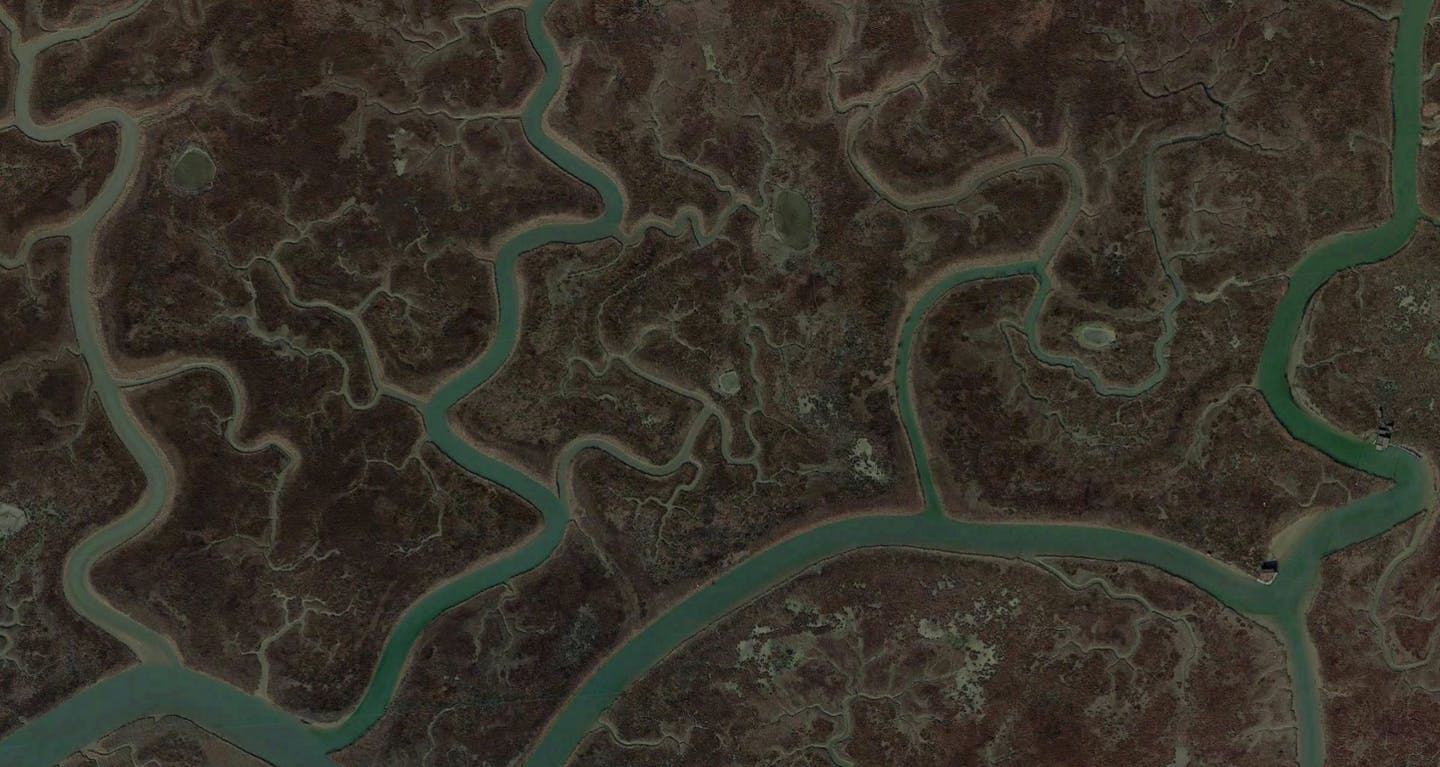
Over time, I came to understand that this strong social and relational dimension was also shaped by the presence of water, by the backwash that draws you back into the city and opens up new possibilities for discovery. Slowly, you begin to realize that you are part of a dense network of currents, which brings to mind the intricate patterns of the barene, the lagoon’s true lungs. These green islands lie in the open lagoon and are home to an immense variety of grasses that slow the incoming currents. Their structure is woven through with a dense network of channels that allow water to circulate.
Perhaps in an attempt to emulate these remarkable natural formations, some residents have come together to help safeguard an ecosystem under threat. Numerous organizations have taken shape across the lagoon with the aim of getting to know this landscape more closely: institutions, independent associations, locally rooted initiatives, and festivals that also collaborate with one another to share situated knowledge, from science and fishing to marine biology, involving the city’s inhabitants.
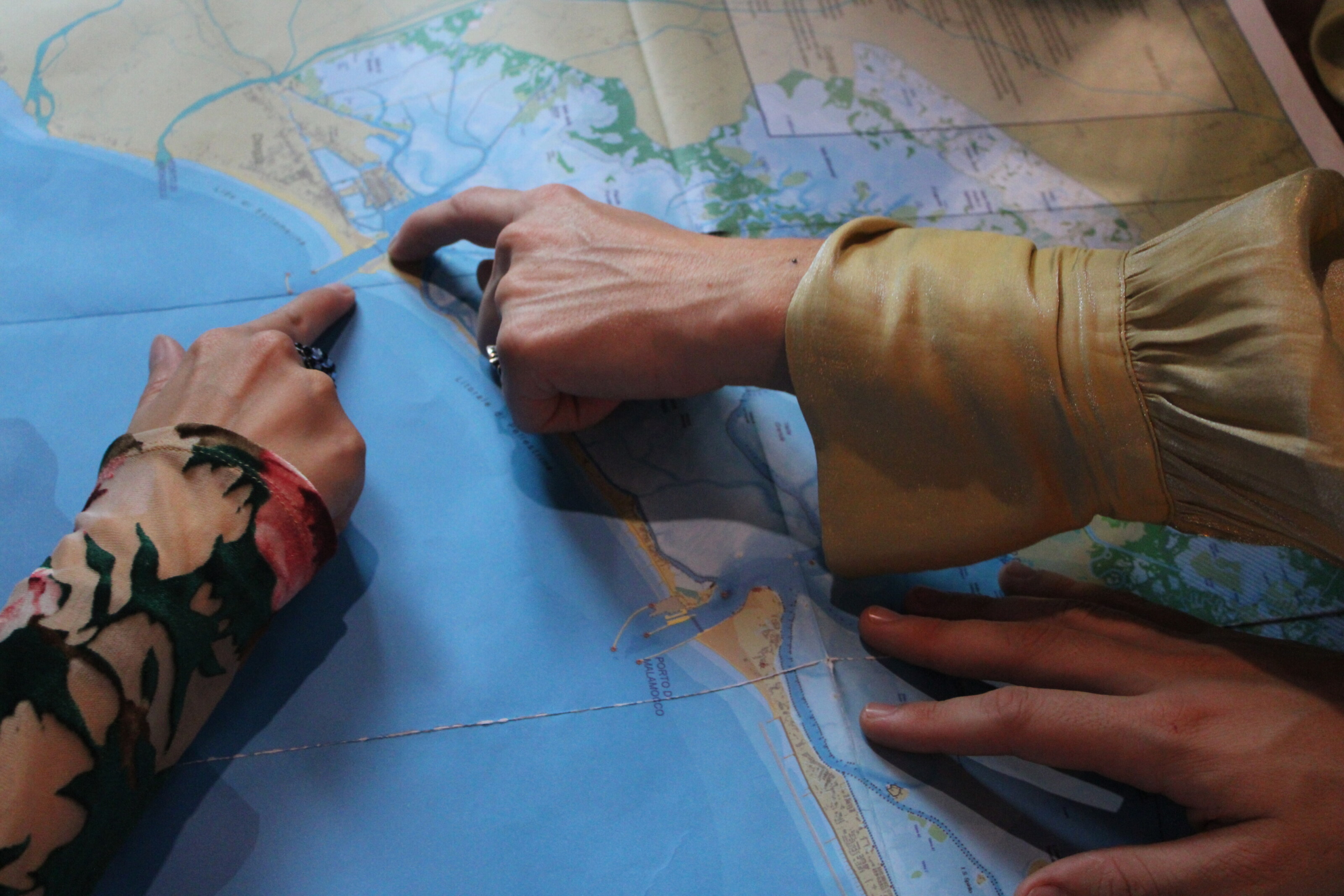
Making this dense network of collaboration visible is therefore essential. Through new artistic languages, it explores ways of learning in close contact with the lagoon. Workshops, performances, convivial gatherings, and sound immersions offer direct encounters with the landscape, allowing people to develop a bodily understanding of this microcosm. Together, these initiatives form a cultural undergrowth that is mobilizing to reclaim new forms of conviviality.
Art becomes an amplifying tool, accessible to people from different backgrounds, communities, and age groups. It can connect disciplines that might otherwise never encounter one another. Here, art works alongside activists, fishers, seafarers, scientists, biologists, and local residents, who come together to develop educational programs that rethink how we live in contact with the lagoon. Art is proposed as a field of experimentation, pedagogy, and social transformation, capable of building alliances between otherwise distant areas of knowledge.
It offers access to a different temporality of being, opening up an experiential realm that activates imagination and inventiveness: essential faculties for envisioning an alternative to the dominant destiny that places us at the service of the capitalist machine.
Stepping away, even briefly, from the project-driven timelines of work and entering a practice that is not productive but imaginative is a simple, radical, and necessary gesture. It allows us to enter a dimension of the unknown.
Learning to inhabit this slower temporality and shifting our gaze toward new horizons creates space within a society where everything seems required to meet capitalist demands, where every action is programmed toward a commercial end. Here, the aim is to come into contact with a fragile balance, one that remains open to what has yet to emerge. This requires learning to wait and to stay with a problem long enough to understand it, allowing ourselves to be guided toward new possibilities for mutual care.
This, I believe, is what water can teach us: water rejects nothing, but creates differently with what it receives and transforms. It can reveal much about adapting one’s form to a space, or learning to take up less space. Navigating new forms and imagining new constellations to develop a plural way of thinking becomes a necessity if we are to move beyond the speculative projection of a predetermined future.
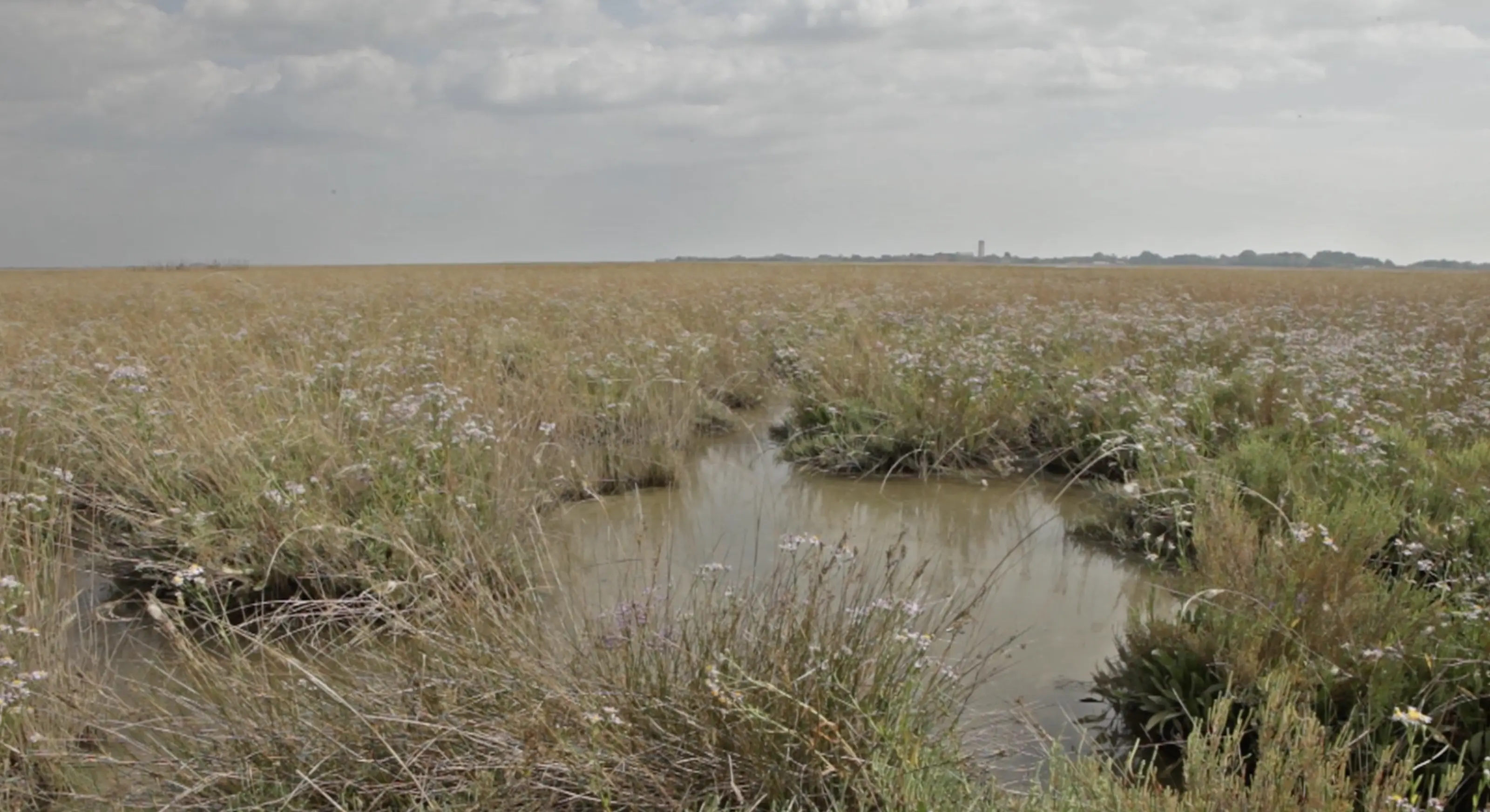
Entering into this connection with the lagoon ecosystem means facing a series of challenges, both personal and perceptual. It requires stepping out of sync with productive rhythms and allowing ourselves to be transformed by another temporality, shaped by the seasons, rainfall, winds, and tides. It is a slow process where research itself must be questioned: control and rapid analysis suspended, making room for listening, presence, and waiting.
This means proposing a different ecology of attention, a form of knowledge that does not impose itself but develops over time through cohabitation, observation, and interdependence. It means shifting our perspective: no longer seeing water as a backdrop or an obstacle to overcome, but as a living, active presence capable of teaching us. The challenge, then, is to transform our ways of knowing by decentering ourselves and becoming more permeable. This approach does not separate thought from the body, or the human from the nonhuman. Instead, it allows itself to be informed by the movements of the world rather than seeking to dominate them. It is an invitation to be with, rather than above or against.
Such an approach brings forth a form of knowledge that is neither linear nor academically codified, but artistic, slow, co-thinking, embodied, and situated, and therefore able to create space for imagination and coexistence. From this perspective, Venice is a planetary kaleidoscope, a sensitive apparatus capable of refracting the ecological crisis and the many ways of inhabiting land and water. Its amphibious morphology, hydraulic history, vulnerability, and vitality make it a unique place from which to rethink our relationship with water, with time, and with what is other than us.
Exploring Venice through hydrofeminist approaches and artistic methodologies allows us to enter fluid, nonlinear temporalities, opening up the possibility of developing new imaginaries and new forms of care. It is an act of critical fabulation, intended to contribute to a generative body of knowledge that transforms research into practice and practice into relation.
Excerpt from “Thinking with the Lagoon: Venetian Writings and Practices,” Adelaide Gnecchi Ruscone, 2025.
Related Cases
2.3 On Cultural Organizations
Open case Read caseDeveloping cultural infrastructures across institutions and independent organizations: Centre d’Art Contemporain Genève, Pinacoteca G.A. Levis Chiomonte, Arteco, Nova Express Magazine, Kabul Magazine, Barriera, Karussell, Treti Galaxie, Palazzo Irreale, Painters Painting Paintings.
2.4 On Artists
Open case Read caseDeveloping identities, platforms, and contexts around artistic practices: Paola Pivi, Julia Krahn, Sara Enrico, Riccardo Baruzzi, Tiziano Martini, Viola Leddi, Emilio Fantin, Grace Prince, Ramona Ponzini, Andrea Magnani, Variante Artistica, Altalena, Resign.
2.5 On Businesses
Open case Read caseBringing artistic value into business structures: Simplify, Oliaros, Jar, Vespignano.